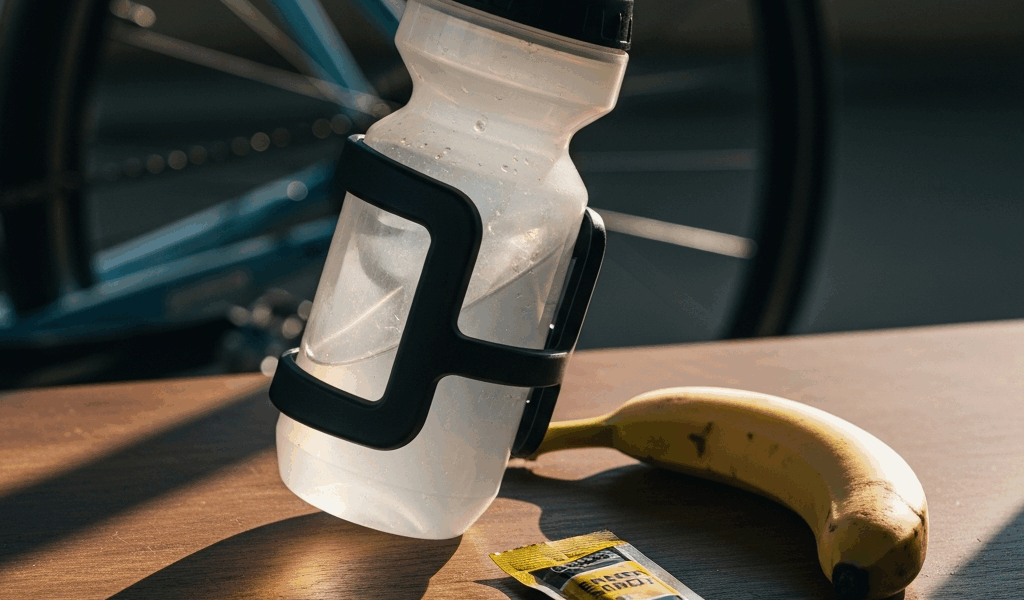
Why GI Problems Are So Common on the Bike
Stomach trouble on long rides has evolved with all the conflicting advice flying around. Eat more. Eat less. Try this gel. Ditch that bar. Most of it misses the actual problem.
As someone who spent three years convinced I just had a weak stomach, I got hands-on with cycling GI issues the hard way. Bonking on a 60-miler meant 20 miles of nausea, cramping, or sudden urgency — sometimes all three. I tried different bars, different gels, different timing windows. Nothing stuck until I stopped treating my gut like a black box and started diagnosing it like a mechanic. Today, I’ll share it all with you.
Cycling creates a genuinely weird digestive environment. Your posture compresses your digestive tract. Blood redirects to your legs the second you hit threshold. Core temperature climbs. You’re bouncing on a saddle. And meanwhile, you’re trying to push 200-plus calories per hour into a system that’s essentially staging a work slowdown. Most people don’t eat while sprinting upstairs. Cyclists do this for hours on end.
But here’s the thing — stomach pain on the bike isn’t random. It’s a signal. Learn to read it and you can usually fix it in two or three rides.
This article isn’t a generic list of GI problems. It’s a diagnostic framework. You identify your specific symptom — cramping, bloating, nausea, urgency — trace it back to its actual cause, then fix one variable at a time. Most riders crack it within a few weeks. So, without further ado, let’s dive in.
Fueling Too Much Too Fast
Quick note before the rest of this.
Your gut can absorb roughly 60 to 90 grams of carbohydrate per hour. The ceiling depends on your carb source mix — fructose, glucose, and maltodextrin each use different intestinal transporters. Combine them strategically and you can push closer to 90g. Rely on a single source and you’re probably maxing out around 60g. Many riders have no idea this limit exists.
They’ll pack three Clif bars, two Maurten gels, and a full bottle of Skratch into the first 90 minutes. That’s roughly 80g of carbs from the bars, 35g from the gels, 30g from the drink — about 145g total consumed in a window where the gut can realistically handle 75g. Maybe.
What happens next? Bloating. That heavy, sluggish sensation. Nausea that creeps in somewhere around mile 25 and just sits there, getting worse.
The fix is counterintuitive. Eat less frequently, not more. Space gels out. If you’re taking one every 45 minutes, move to every 60. If you’re draining a full 24-ounce bottle of sports drink per hour, dial back the concentration. Drop your fueling rate from 90g carbs per hour to around 70g and actually pay attention to how your stomach responds across two rides — not one.
This is the most common cause I’ve seen, and it’s the easiest to misdiagnose. It feels exactly like food sensitivity when it’s really just overfeeding.
Real-world math: a 75-kilogram rider on a three-hour endurance ride might target 150 total grams of carbs. That’s 50g per hour — plenty of room to mix gels, chews, and sports drink without overwhelming intestinal capacity. Push that same rider to 90g per hour and you’re asking their gut to work 80 percent harder while it’s receiving 40 percent less blood flow. That’s not a stomach problem. That’s a math problem.
High Fat or Fiber Foods Before the Ride
Frustrated by a string of bad rides with no obvious cause, I started logging every meal for six weeks using a Notes app on my phone and a $4 spiral notebook. That’s when the pattern finally showed up — and it had nothing to do with what I ate during the ride.
Fat and fiber both slow gastric emptying. Useful when you’re sitting at a desk. On the bike, it’s a liability. Your digestive system needs to move food through efficiently — instead it’s still processing a high-fat, high-fiber breakfast while your blood vessels are screaming for oxygen to get to your legs. The cramping or bloating you feel at mile 30 usually isn’t from what you ate at mile zero. It’s from what you ate two or three hours before you even rolled out.
Common culprits: whole grain toast with almond butter, steel-cut oatmeal, high-fiber cereal, nuts, seeds, avocado, chia. These foods are genuinely excellent. Just not pre-ride excellent.
The fix is switching to low-fiber, moderate-carb meals two to three hours before you ride. White toast with honey. A banana with jam. A plain bagel. Rice with a small portion of chicken or turkey. Low-fiber cereals like Corn Flakes. These digest quickly and clear your stomach before your effort actually begins. You feel lighter. Your gut stays settled. It’s a surprisingly significant difference.
I tested this twice a week for a full month. High-fiber breakfast, ride at 10 a.m. — stomach disaster, nearly every time. Same high-fiber breakfast, ride pushed to 1 p.m. — completely fine. The only difference was time. By 1 p.m., three to four hours had passed. Gastric emptying had finished its work. Skip the misstep I made — get the timing right before you start swapping out every other variable.
Dehydration and Gut Motility
Dehydration causes stomach pain. Not as a side effect. Directly.
When blood volume drops — even slightly — your gut is one of the first tissues to lose priority. Muscles take it. Skin takes it for cooling. Your digestive tract gets whatever’s left. An under-perfused gut doesn’t move food through efficiently. It spasms. It cramps. It makes your ride miserable.
A lot of riders mistake this for food sensitivity. They’ve had the same gel and the same 20-ounce bottle of sports drink every ride for months. Then one hot Tuesday or one unusually hard effort — stomach falls apart. It’s not the gel. It’s a fluid deficit.
The hydration math isn’t complicated. Most riders need 500 to 750 milliliters per hour depending on temperature and effort. On a 70-degree day at moderate intensity, 500 to 600ml is usually enough. On an 85-degree day or at threshold, you need closer to 700 to 800ml. I’m apparently a heavy sweater and a 750ml Specialized Purist bottle every 45 minutes works for me, while 500ml per hour never does. Your numbers might differ — but the principle holds.
Drink proactively. Thirst is a lagging indicator — it shows up after your gut is already under-perfused. Small sips every 15 to 20 minutes beats large gulps every 45. Keeps blood flow steadier. Keeps your gut’s environment more stable.
On rides longer than two hours, add electrolytes. Sodium — somewhere around 300 to 500 milligrams per liter — helps retain fluid and maintain blood plasma volume. Plain water alone can actually dilute your plasma on very long efforts and make dehydration worse. That’s a trap a lot of endurance riders fall into without realizing it.
How to Fix It for Your Next Ride
Use this troubleshooting checklist. Pick the symptom that matches your experience — and only change one variable at a time.
If you feel bloated or heavy
- Cut your fueling rate by 20 to 30 percent — from 90g carbs per hour down to around 65g.
- Space gels further apart (every 60 minutes instead of every 45).
- Switch to a lower-concentration sports drink — 4 to 6 percent carbs instead of 8 to 10.
- Test this across two full rides before touching anything else.
If you feel cramping or stabbing pain
- First: bump fluid intake by 150 to 200 milliliters per hour.
- Add electrolytes if you’re not already using them.
- If cramping persists, look at what you ate in the three hours before riding.
- If it was high-fat or high-fiber, switch to a low-fiber, moderate-carb meal and retest.
If you feel nauseous
- Dial back fueling rate first — same protocol as the bloating fix.
- Then check hydration status honestly, not optimistically.
- Nausea usually points to either fuel overload or a fluid deficit. Rarely both at once.
If you feel sudden urgency
- This usually signals over-fueling with a specific carb source or residual fiber from your pre-ride meal.
- Pull that carb source or swap your breakfast and test for two rides before drawing conclusions.
The elimination approach works because it isolates a single variable. You genuinely can’t know whether it’s the gels, the drink, your breakfast, or your hydration rate until you change one thing and hold everything else constant across two or three rides. That’s what makes this process endearing to us cyclists — it treats the gut like a system with actual inputs and outputs, not a mystery.
Most riders crack their GI issues within two to three weeks of this process. You’re not broken. Your gut isn’t weak. You’re just sending it instructions that don’t match your physiology. Once those two things line up, the problem tends to vanish — sometimes overnight.



Subscribe for Updates
Get the latest cycling nutrition hub updates delivered to your inbox.
We respect your privacy. Unsubscribe anytime.