How Heat Steals Your Watts
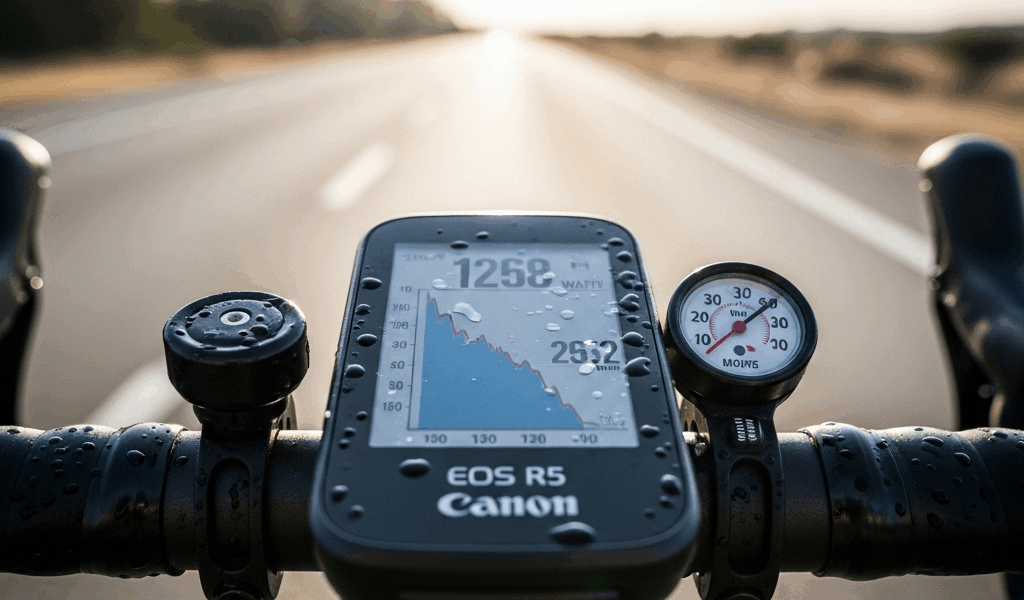
I discovered the power-loss problem on a 95°F July morning in Colorado. Same route I’d ridden a hundred times. Same effort. My power meter showed 287 watts average—a full 8% drop from my baseline 312-watt threshold efforts in spring. The kicker? My legs felt fine. My perceived exertion felt sustainable. The numbers didn’t lie.
Heat has gotten complicated with all the physiology flying around. Let me break down what actually happens inside your body when ambient temperature spikes.
Your core temperature rises faster than it does in cooler conditions. Within 15-20 minutes of hard riding in heat, your body prioritizes thermoregulation over performance. Blood vessels near your skin dilate to dump metabolic heat — this shift diverts blood flow away from your working muscles. Less blood reaching your legs means less oxygen delivery, less nutrient availability, fewer recruited muscle fibers firing at full capacity. On an 85°F ride, you’re pulling blood away from your quads to cool your skin. On a 65°F ride, that blood stays concentrated in your muscular system. That’s the difference.
Glycogen burns faster under heat stress.
Temperature elevation accelerates your nervous system’s sympathetic response. Your body pumps out more epinephrine and norepinephrine — stress hormones that trigger faster glycogen mobilization from muscle and liver. A 90-minute hard effort in cool conditions might burn 90 grams of muscle glycogen. The same effort in heat? 110-130 grams. Your fuel tank empties quicker. By kilometer 45 of a 2-hour ride, you’re running leaner, and power output reflects it.
Plasma volume shrinks from sweat losses.
You lose 1-2 liters of fluid per hour in hot conditions if you’re riding hard. That fluid comes mostly from your blood plasma — the liquid component that carries oxygen, nutrients, and hormones to tissues. Lose enough plasma volume and your cardiovascular system can’t sustain the same cardiac output. Your heart works harder to pump less-concentrated blood. Central blood pressure drops. The Frank-Starling mechanism tells your heart that venous return is lower, so it contracts with less force. Watts decline. This cascade happens even if you feel hydrated, which is what makes it treacherous.
Put these three mechanisms together on a 2-hour summer ride, and you’re looking at a measurable power deficit — typically 5-15% below your cool-weather capacity, depending on humidity, fitness level, and acclimatization.
Why You Still Feel Strong But Numbers Drop
This section matters because I made a stupid mistake my first summer training block. I ignored the power meter data because my legs felt good.
Perceived exertion and actual power output are decoupled in heat. Your rate of perceived exertion (RPE) is governed by central fatigue signals — mainly core temperature, blood pH, and the brain’s interpretation of effort relative to expected output. In hot conditions, your brain gets confused. Core temperature is high. Your body’s thermoregulatory load feels substantial. But muscle contractility — the actual mechanical output — hasn’t collapsed yet. So you feel hard-working and engaged while your power meter reads 280 watts instead of 315.
The disconnect stems from a survival priority shift. Your nervous system is partly focused on cooling. That mental load registers as “effort” even if neuromuscular power hasn’t fully degraded. You perceive difficulty accurately. The power loss is real, separate, biochemical. That’s what makes heat endearing to absolutely nobody.
This is why ignoring your power meter in summer is dangerous. You’ll override it based on feel, ride harder to compensate, accelerate dehydration, and risk crashing. Trust the data. If your 20-minute power test showed 315 watts in April and you’re averaging 295 in July, you’re down 20 watts. That’s objective. Your perception of sustainable effort means nothing when thermoregulation is actively stealing blood flow from your legs.
I learned this the hard way after doing three sub-threshold intervals in 92°F heat because they “felt easy” and completing one on fumes with a 45-minute recovery instead of 30 minutes. Don’t make my mistake.
Pre-Ride Nutrition to Maintain Power in Heat
Start two to three hours before you roll. This timing lets your digestive system settle before you’re asking muscles to perform.
Sodium intake matters more in heat than cool weather. Consume 500-600mg of sodium 2-3 hours pre-ride. I don’t mean “eat a salty bagel.” I mean measured intake: a sodium capsule (I use Liquid IV packets at $1.20 each), a sports drink with defined electrolyte content, or a specific salty snack like pretzels or salted almonds. Sodium in your blood before the ride creates osmotic pressure that pulls fluid into your vascular space. When you start sweating, you’re starting with a larger plasma volume. That buffer absorbs early sweat losses and keeps central circulation robust longer.
Load carbohydrates strategically. Eat 1-1.5 grams of carbs per kilogram of body weight 2-3 hours before the ride. For a 70kg cyclist, that’s 70-105 grams of carbs — roughly two medium bananas plus a slice of toast with honey. This tops your muscle and liver glycogen stores. In heat, you’re burning that fuel 15-25% faster than baseline, so starting full matters. A deficit from the gun amplifies mid-ride power loss.
Hydrate aggressively but not recklessly. Aim for 400-600ml of fluid 2-3 hours pre-ride, then another 200-300ml about 20 minutes before you leave. This pre-loading expands your plasma volume before exertion stress hits. Don’t chug 1 liter right before riding — you’ll sweat most of it out in the first 30 minutes with no benefit and potential GI distress.
Check your hydration status. Probably should have opened with this section, honestly. Weigh yourself nude before riding. Ideally you’re no more than 1-2% below your normal weight (for a 70kg rider, that’s 700-1400g lighter than baseline). If you’re 3-4% dehydrated before you start, you’re already compromised. Hot-weather power loss compounds from a hydration deficit.
During-Ride Fueling That Actually Works in Heat
The problem intensifies mid-ride. Heat increases gastric distress. Your stomach tolerates carbohydrates less efficiently when core temperature is elevated and blood is diverted away from your gut. Simultaneously, glycogen depletion accelerates. Standard fueling — 60 grams of carbs per hour — becomes insufficient in hot conditions.
Increase carbohydrate intake to 70-90 grams per hour during intense efforts in heat. Not 100+ grams; that’s where GI system rebellion happens. Seventy to 90 grams is aggressive enough to match the accelerated burn rate without overwhelming your stomach. Use multiple carbohydrate sources (glucose + fructose mix, or sports drink + solid carbs) to activate different intestinal transporters and reduce osmotic stress.
Keep drinks cold. This is non-negotiable. A cold sports drink (55-65°F) cools your core passively as it moves through your digestive system. This small temperature drop reduces thermoregulatory demand, meaning less blood gets shunted to your skin. More blood stays in your muscles. A 12-ounce cold beverage every 15 minutes does more than hydrate — it actively reduces heat stress. I used insulated bottles with ice packs for 90+ minute summer rides in 2019, and the cooling effect is subtle but measurable in power files. Honestly, it’s worth the extra weight.
Sodium intake during the ride maintains plasma osmolarity. Consume 500-700mg sodium per hour in your drink or as capsules with water. This counteracts sodium losses in sweat and keeps fluid retention high. Without it, you’ll urinate away ingested water, losing the hydration benefit entirely.
Include ice socks or ice vests if your event allows. Worn for 5-10 minutes during a longer ride, precooling reduces core temperature by 0.5-1.5°C and buys 20-40 minutes of preserved power output before thermoregulatory strain fully reasserts itself. This is extreme but legitimate for structured training or racing in dangerous heat.
Test all of this in training first. New fueling strategies in a race or key workout is how you end up bonking or vomiting at kilometer 80.
How to Test This on Your Next Summer Ride
Design a simple self-experiment. Pick a route you’ve ridden multiple times with consistent power data. Ride it three times in the next two weeks under different fueling protocols while keeping effort level constant.
Ride one — baseline (minimal intervention): Your normal pre-ride meal, normal hydration, normal mid-ride fueling. Record average power, average heart rate, and how you felt at kilometer 60 and kilometer 90.
Ride two — pre-ride optimization: Apply the pre-ride protocol above: 600mg sodium 2.5 hours pre-ride, 90 grams carbs, hydration status check. Use your current mid-ride fueling. Compare power output to ride one.
Ride three — full protocol: Pre-ride optimization plus 80 grams carbs per hour mid-ride at 600mg sodium per hour, using a cold drink. Cold fluids every 15 minutes. Compare power to rides one and two.
Export your power files. Look at the first 90 minutes of each ride (this window minimizes cumulative fatigue variables). Compare average power in that window across all three rides. A realistic expectation is 8-12 watts recovered on ride three versus ride one — not massive, but meaningful during training blocks. The real win is consistency. Your power output stays more stable mid-ride. That late-ride fade lessens.
You’re not chasing perfection. You’re measuring what actually works for your physiology in your climate. That data beats any generic advice.



Subscribe for Updates
Get the latest cycling nutrition hub updates delivered to your inbox.
We respect your privacy. Unsubscribe anytime.