How Cold Weather Physically Cuts Your Power Output
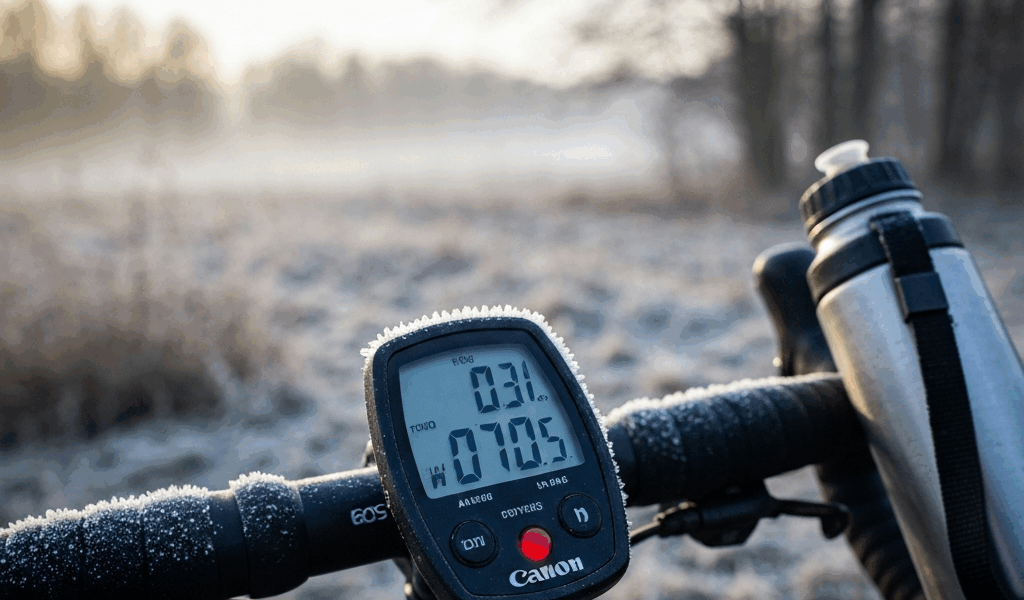
Cold weather has gotten complicated with all the conflicting advice flying around about why cyclists lose power in winter. Honestly, it’s more dramatic than most riders realize. The moment air temperature dips below 50°F, your body initiates a survival response that directly sabotages your ability to produce watts.
The primary culprit is vasoconstriction — a mechanism called peripheral vasoconstriction that preserves core body temperature. Blood flow to your extremities, including working leg muscles, can drop by 30–40% compared to temperate conditions. Your quadriceps, hamstrings, and calves receive less oxygen-rich blood. Fewer mitochondria get the substrate they need to fire efficiently. I noticed this firsthand during a January ride in Vermont when my power output on the same climbing interval dropped from 320 watts to 260 watts, even though my perceived effort felt identical. That’s a 60-watt deficit for the same sensation of effort.
Cold also hammers muscle enzyme activity. The enzymes responsible for aerobic metabolism — particularly those in the citric acid cycle — operate at reduced efficiency in cold muscles. Research shows that muscle contractility and power production can decrease 5–10% for every 1°C drop in core body temperature below 37°C. If your core drops to 35.5°C during a 90-minute winter ride, you’re looking at a 7–10 watt deficit per 100 watts of intended power. That compounds fast when you’re trying to hold steady-state effort.
Your neuromuscular coordination suffers too. Cold muscles become stiffer, and the neural signals that fire fast-twitch muscle fibers slow down. Short, sharp efforts — like bridging a gap or attacking a climb — feel sluggish and unresponsive. The muscle feels like it’s wrapped in cellophane.
Why Standard Fueling Breaks Down in the Cold
Fueling in winter isn’t just about eating the same calories you’d consume in July while wearing a heavier jacket. Your digestive system fundamentally changes when core temperature drops.
Probably should have opened with this section, honestly. Nutrition issues often explain power loss more than people think. When core temperature falls, your gastrointestinal tract prioritizes survival over digestion. Blood is shunted away from your stomach and intestines toward your core and working muscles. Gastric emptying — the rate at which your stomach moves food into your small intestine — slows by 20–30% in cold conditions. A gel that normally takes 15 minutes to start absorbing might take 22 minutes instead. A sports bar takes even longer.
Carbohydrate absorption specifically suffers. Your intestinal cells rely on glucose transporters (SGLT1 and GLUT2) to pull carbs into the bloodstream. These transporters function optimally at warm body temperatures. When your core dips, the osmotic gradient weakens, and you absorb fewer carbs per minute. A 60-gram-per-hour fueling strategy in 72°F becomes closer to 45 grams per hour when conditions drop to 35°F. Your legs don’t get the glycogen replenishment they need, and power output decays sooner.
Electrolyte absorption also slows. Sodium helps regulate intestinal water absorption — essential for maintaining plasma volume. In cold, this process becomes less efficient, which can actually lead to relative dehydration even if you’re drinking enough. A 500-milliliter bottle of sports drink in temperate weather delivers stable hydration. The same bottle in 28°F conditions might leave you 100–150 milliliters short of actual fluid availability.
Cold also dulls appetite signaling. Your brain receives conflicting messages: muscles are burning fuel, but peripheral cold sensors are screaming “conserve calories.” Many cyclists report zero hunger on winter rides, then bonk hard at mile 75. You’re not eating enough because your body is fighting you.
Pre-Ride Warmup Strategies That Actually Preserve Glycogen
A proper warmup in cold weather raises core and muscle temperature, primes your cardiovascular system, and — this is the key part — reduces early glycogen depletion during the main ride.
Frustrated by cold conditions, most cyclists either skip warmup or do a half-hearted 5-minute spin. That’s a mistake. Your muscles need 15–20 minutes of structured effort to reach the enzyme activity threshold where aerobic metabolism becomes efficient. On a trainer or rollers, start at a very easy pace (around 50% of threshold power) for 3 minutes. Then do a series of 30-second ramps — increasing intensity every 30 seconds for 5–6 minutes total. Follow with 2–3 minutes of steady tempo work at 80–85% of threshold. Finish with a 1-minute hard effort (95% threshold), then drop back to easy and roll outside onto your ride course.
Total indoor warmup time: 15 minutes. Your core temperature rises roughly 1°C per 5 minutes of sustained effort, so this protocol gets you from ambient-cold (maybe 32°F in the garage) to a proper working state.
Why does this preserve glycogen? A cold start forces your body to rely on anaerobic metabolism for the first 20–30 minutes of riding. Anaerobic metabolism is hugely glycogen-inefficient — you burn glycogen stores 3–4 times faster per unit of work compared to aerobic metabolism. A warmup elevates core temperature so that aerobic pathways engage immediately once you begin the main ride. Instead of burning 90 grams of glycogen in the first 30 minutes, you burn 55 grams. Over a 120-minute ride, that’s a massive difference in how you feel at the finish.
Carb timing matters too. Consume 30–40 grams of carbs 30 minutes before your warmup — a banana, a sports drink, toast with honey. This ensures blood glucose is stable during the warmup phase, and glycogen stores aren’t getting torched unnecessarily. I’ve found that skipping this pre-warmup carb makes the entire first 45 minutes of the ride feel flatter, no matter how hard I warm up.
On-Bike Fueling Adjustments for Cold Rides
Once you’re rolling, forget your summer fueling plan. Cold requires adjustments in carb type, total calorie intake, and eating frequency.
Switch from gels to liquid calories. A gel requires you to stop chewing, which is hard in cold because your jaw feels stiff, and it relies on saliva production to initiate digestion — saliva production drops significantly in cold. A sports drink (like Gatorade, GU Roctane, or SIS Go) is already partially dissolved, and your body absorbs it faster. Aim for a carbohydrate concentration of 6–8% (14–19 grams per 250 milliliters). Anything above 8% will slow gastric emptying further, which defeats the purpose.
Increase total carb intake by 15–20%. If you normally aim for 60 grams per hour, push toward 70–75 grams per hour in cold conditions. You’re losing efficiency in absorption, and your muscles are burning fuel faster due to the energy cost of thermoregulation. A 90-minute ride at threshold in 45°F burns roughly 120–140 grams of carbs total; a temperate-weather equivalent burns 100–110 grams.
Eat more frequently in smaller amounts. Instead of one 35-gram gel every 45 minutes, consume 20–25 grams every 30 minutes. Smaller boluses are easier to digest when core temperature is low, and frequent small inputs maintain steadier blood glucose.
Add protein and fat to your fueling mix if your ride exceeds 90 minutes. A sports bar with 5–8 grams of protein and 4–5 grams of fat (like a Clif Bar or similar) slows gastric emptying slightly, but it triggers stronger satiety signals — making you feel less hungry — and it provides sustained energy. This is especially useful if you’re struggling to eat enough purely from gels and sports drinks.
Warm your bottles inside your jersey or use an insulated bottle cage. A cold liquid in your stomach further drops core temperature, forcing your body to work harder to maintain thermoregulation. A 500-milliliter bottle at 35°F requires your body to warm it to 37°C before absorption can happen efficiently. Use a bottle cage with thermal lining (brands like Elite make these for 30–40 dollars), or keep your bottle inside a jersey pocket before drinking. This sounds minor, but it saves 10–15 watts of wasted thermoregulation effort.
Recovery Nutrition After Cold Weather Efforts
Cold rides deplete glycogen stores faster and stress your nervous system more intensely than equivalent warm-weather efforts. Your recovery window is slightly shorter and more critical.
Consume 1.2 grams of carbohydrates per kilogram of body weight within 30 minutes of finishing. For a 70-kilogram cyclist, that’s 84 grams. Add 0.3–0.4 grams of protein per kilogram (21–28 grams for that 70-kilogram rider). A chocolate milk shake, a recovery drink like GU Recovery Brew, or a bagel with peanut butter hits these targets easily.
Rehydrate aggressively. Cold suppresses thirst signaling, so you likely finished your ride underhydrated. Drink roughly 150% of the fluid you lost (weigh yourself before and after the ride; the difference is roughly your fluid loss). Spread this over 4 hours post-ride to maximize absorption.
Eat a balanced meal within 2 hours. Your body’s ability to refill muscle glycogen remains elevated for roughly 2 hours post-exercise, so don’t waste it on snacks alone. A meal with rice, lean protein, and vegetables will replenish both glycogen and micronutrients lost to the metabolic stress of cold-weather riding.
Cold-weather cycling isn’t about toughness. It’s about understanding what your body is fighting against and fueling the battle appropriately.


Subscribe for Updates
Get the latest cycling nutrition hub updates delivered to your inbox.
We respect your privacy. Unsubscribe anytime.