Why Pre-Ride Fueling Fails for Most Cyclists
I spent my first two years cycling bonking on century rides because I thought fueling was optional. Then I’d overcompensate—a huge breakfast 30 minutes before rolling out, spending the first hour fighting nausea and stomach cramps. The problem wasn’t that I didn’t care about nutrition. It was that I didn’t understand the timing.
Most cyclists make one of three mistakes. They eat too close to the start, leaving partially digested food sloshing in their stomach while climbing. They eat too much volume, overwhelming their gut when blood flow shifts to working muscles. Or they choose foods designed for sitting at a desk, not pedaling hard for four hours. Any one of these torpedoes a ride.
Either you bonk because your muscles run dry, or you suffer through fighting nausea. Neither has to happen if you nail the basics.
The Timing Window That Matters
Pre-ride fueling works in three distinct zones. Get the timing right, and everything changes.
Two to Three Hours Before
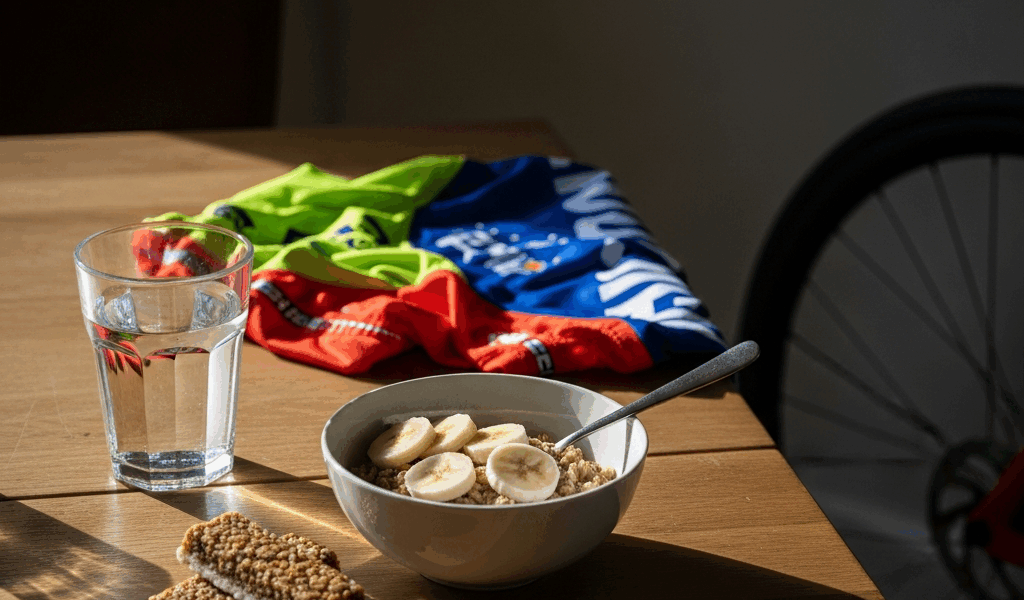
This is your main meal window. Your digestive system has enough time to break down a full breakfast without flooding your stomach right before exertion. Aim for something substantial — oatmeal with a banana, scrambled eggs on white toast, or rice with chicken and a bit of soy sauce.
The sweet spot: 1 to 1.5 grams of carbohydrates per pound of body weight. A 150-pound cyclist would eat 150–225 grams of carbs. That sounds like a lot until you realize a bowl of oatmeal (one cup cooked) is about 50 grams, and two slices of white toast with jam adds another 40 grams. Suddenly you’re there.
Why this works? Your liver stores about 100–120 grams of glycogen. A meal this size replenishes liver glycogen and tops off muscle glycogen, giving your engine a full tank. Three hours gives your stomach time to empty and your small intestine to absorb the glucose. You clip in without feeling stuffed.
45 to 60 Minutes Before
You missed the main meal window. Now what?
Go light and fast-digesting. A banana with a spoonful of peanut butter, two rice cakes with honey, or a sports drink — not an energy bar. These slip through your stomach quickly because they’re low in fat and fiber, the two things that slow digestion.
Probably should have opened with this section, honestly. Most cyclists show up 45 minutes before a ride, realize they haven’t eaten, and panic. This window is your fail-safe.
A banana is roughly 27 grams of carbs. Two rice cakes with a tablespoon of honey add another 35 grams. That’s 60 grams of quick fuel without the heaviness. Your stomach clears this in 30–45 minutes, and the glucose hits your bloodstream right when you need it most.
15 to 20 Minutes Before
Last-ditch effort. A few sips of sports drink or a single rice cake. Nothing solid at this point — your gut is already redirecting blood flow to your legs. Anything heavier will sit like a rock and ruin the first five miles.
This window is damage control, not fuel strategy. A 6–8 ounce sip of a sports drink (Gatorade, Tailwind, or something similar) gives you a small glucose spike without the volume that triggers cramping or slosh during the opening miles.
Portion Sizes That Won’t Sit Heavy
Fueling is about math, not guessing.
For a 90–120 minute ride, aim for 0.5 to 0.75 grams of carbs per pound of body weight. For a 2–3 hour ride, go to 1 gram per pound. For anything longer, back-load the carbs into your during-ride strategy — that’s a different article.
A 160-pound cyclist prepping for a 2.5-hour ride needs about 160 grams of carbs. Here’s what that looks like in real food:
- 1.5 cups cooked oatmeal (75g carbs) + 1 banana (27g) + 1 slice white toast with jam (30g) = 132g
- 2 slices white toast (40g) + 2 eggs (1g) + 1 cup orange juice (26g) + 1 banana (27g) = 94g
- 1 cup white rice (45g) + 4 oz grilled chicken (0g) + 1 cup fruit juice (28g) = 73g
Protein matters, but less than cyclists think. Aim for 10–20 grams total from your pre-ride meal. Too much protein (anything over 30 grams) slows digestion and can trigger nausea. Those eggs or chicken are there for satiety and amino acid availability — not primary fuel.
Fiber is your enemy before a ride. Most long-ride bonking articles skip this part. A high-fiber cereal or whole wheat toast ferments in your gut during exertion, creating gas and bloating. White bread, white rice, and refined oats digest faster and create zero digestive fuss. This isn’t about “clean eating” — it’s about biomechanics. During hard efforts, blood flow to your GI tract drops by 60–80%. Refined carbs demand less digestive work.
Foods That Work vs Foods That Backfire
I learned this the hard way. Ate a fiber-loaded breakfast before a 70-mile gravel ride and spent the first 40 miles cramping. Never again.
Safe Foods (Eat These)
- White toast with jam or honey. Fast carbs, zero fiber, empty stomach in 30–45 minutes.
- Banana. 27 grams carbs, potassium, zero digestion stress. The cycling breakfast MVP.
- Rice cakes. 15 grams carbs per cake, bland, sits light.
- Oatmeal (refined, not steel-cut). One cup cooked is 50 grams carbs. Add white milk, not chia seeds.
- Sports drink. Liquid carbs skip the stomach entirely and hit your bloodstream in 5 minutes.
- White rice with a bit of salt. Plain carbs. Boring. Perfect.
- Eggs. Low in carbs but add protein for satiety. Use alongside toast or rice.
- Applesauce or fruit juice. Fast carbs, no texture, no fiber.
Risky Foods (Avoid These)
- Whole wheat or high-fiber cereal. Ferments during hard riding. Creates gas at mile 15.
- Fatty breakfast (bacon, sausage, hash browns). Fat slows gastric emptying. You’ll feel full for hours and your stomach will rebel once you’re climbing.
- Spicy food. Irritates your stomach lining when blood flow decreases. Save it for post-ride.
- Excessive protein (more than 30g). Diverts blood to digestion. Sitting heavy defeats the purpose.
- Nuts or seeds. High fat, high fiber. Both slow digestion.
- Dairy (unless you’re tested and safe). Lactose can cause distress during hard efforts if you’re sensitive. Most cyclists are.
- Raw vegetables. Fiber and volume. Stick to cooked or juiced.
The principle is simple: anything that requires aggressive digestion becomes a liability once you’re working hard. Your body can’t prioritize your GI tract and your legs simultaneously.
Hydration Strategy Before You Clip In
Pre-ride fueling often focuses on food and ignores fluids. That’s backwards.
Drink 500–600 milliliters of fluid (about 17–20 ounces) 2–3 hours before your ride. Water is fine for rides under two hours. For longer efforts, add a pinch of electrolytes — sodium helps retain the fluid instead of sending it straight to your bladder.
Timing matters here too. Drinking 600ml right before rolling out creates bladder pressure and urges you to pee at mile 3. Drinking it 2–3 hours early gives your kidneys time to process and hydrate your cells instead of filling your bladder.
Stop drinking 15–20 minutes before you start. Your gut needs to settle, and your fluid levels are stable. Once you’re riding, that’s when you switch to during-ride hydration strategy — but that’s a different timing equation entirely.
Check your urine before you leave. Pale yellow? You’re hydrated. Dark yellow? Add another 300ml and wait 30 minutes. This takes the guessing out of hydration prep.
Put these rules into practice once, and pre-ride fueling stops being a mystery. You’ll know exactly what your stomach tolerates, exactly when to eat, and exactly how much gets you to the finish line strong instead of struggling to the last mile.
For events longer than about 90 minutes, start with our evidence-based cycling carb-loading guide, then plan the final pre-ride meal.

Subscribe for Updates
Get the latest cycling nutrition hub updates delivered to your inbox.
We respect your privacy. Unsubscribe anytime.