Why Your Stomach Hurts During Long Cycling Rides
I’ve bonked. I’ve cramped. I’ve also spent twenty kilometers convinced my intestines were staging a full revolt, only to realize later it was an absolutely terrible decision to eat a whole energy bar five minutes before a climb. After years of cycling and making basically every GI mistake possible—and I mean every single one—I learned the hard truth: why your stomach hurts during long cycling rides isn’t one problem. It’s three separate mechanical failures that often pile on top of each other.
Most cyclists Google “stomach pain while cycling” after a bad ride and find generic answers about hydration or eating too much. That’s not helpful when you’re trying to figure out which of your habits actually caused the problem. The real answer requires you to diagnose which system failed: your fluid intake, your fueling timing, or your effort level. Without that diagnosis, you’re just guessing on your next ride.
The Three Main Culprits Behind Cycling Stomach Pain
Cycling stomach pain breaks into three distinct categories, and each one needs a completely different fix.
First: dehydration and electrolyte imbalance. Your gut needs adequate sodium and fluid to function. When you’re not drinking enough—or worse, drinking plain water without electrolytes on a hot ride—your stomach becomes acidic and irritated. This gets exponentially worse on warm days because sweat loss accelerates everything.
Second: eating too much, too soon, or the wrong type of food before or during your ride. Your digestive system has real limits on how much it can process while you’re pedaling hard. Eating a 500-calorie breakfast thirty minutes before your ride, or hammering down fifty grams of carbs in five minutes mid-ride, creates acute cramping and discomfort. Your stomach simply can’t handle the volume while your legs are working.
Third: reduced blood flow to your gut during hard efforts. When you ride at threshold or VO2 max intensity, your body diverts blood away from your digestive system toward your legs and lungs. Any food in your stomach moves slower through your system. Combine that with dehydration or poor fueling timing, and pain follows within minutes.
Most bad rides involve at least two of these factors simultaneously—that’s why generic advice fails so spectacularly.
Timing and Portion Size Are Your First Diagnostic Tools
Probably should have opened with this section, honestly.
Your pre-ride meal timing matters more than most cyclists realize. Three hours before a ride, eat a normal meal—pancakes, toast, oatmeal, whatever sits well with you. Two hours before, eat something smaller and lower in fiber: a banana, a rice cake with jam, or a sports drink. Ninety minutes out, you can still handle solid food in small amounts. Thirty minutes or closer to your start time? Stop eating solids entirely. Drink only.
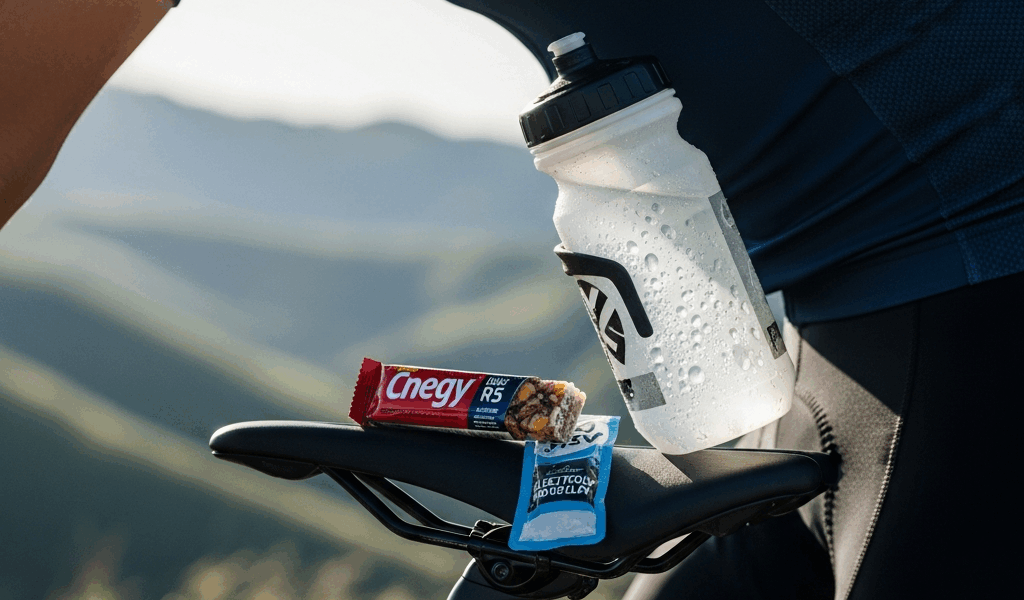
During the ride itself, the rule is simple: thirty to sixty grams of carbohydrates per hour for rides over ninety minutes. That’s roughly one standard energy bar, two energy gels, or four to five sports drink bottles depending on concentration. Most of the stomach pain I’ve experienced came from eating two bars at kilometer forty because I panicked about bonking, then eating another gel at kilometer fifty-five. That’s roughly seventy to eighty grams of carbs in fifteen minutes. Your stomach can’t handle it.
Here’s why portion size matters mechanically: large amounts of food increase what’s called the osmotic load in your stomach. Think of it like pouring a quart of water into a one-pint container while you’re bouncing up and down. The excess sits there, fermenting slightly, creating gas and pressure. That pressure triggers cramping and nausea.
A practical checklist for diagnosing your last bad ride: Did you eat within forty-five minutes of start time? Did you consume more than one fuel product within a thirty-minute window during the ride? Did you eat anything between ninety minutes and thirty minutes before you started? If you answered yes to any of these, timing and portion size were likely your culprits.
How Dehydration and Electrolyte Loss Create GI Distress
Plain water and stomach pain go hand in hand, especially on hot rides above seventy-five degrees.
Here’s the mechanism: your stomach produces acid to break down food. When you’re dehydrated, that acid becomes more concentrated. Concentrated stomach acid irritates the stomach lining, which creates discomfort, cramping, and sometimes nausea. Add high-sugar energy products—gels, bars, sugary drinks without sodium—and the problem worsens. Those products are hypertonic. They pull water from your bloodstream into your gut to dilute them, making you even more dehydrated.
Sodium is the key variable most cyclists ignore entirely. Sodium helps your body retain fluid and signals your stomach to accept water. Without it, you can drink four bottles per hour and still feel dehydrated because your gut isn’t absorbing the fluid efficiently. A sports drink with four hundred to six hundred milligrams of sodium per bottle solves this. A bottle of plain water does not.
You can spot dehydration before it causes stomach pain—thirst is the clearest sign, but it’s already late. Better markers are dry mouth, dark yellow urine before the ride, and unusually low weight loss during the ride. More than four percent of your body weight lost as sweat is concerning. I made the mistake once of riding eighty-five kilometers on a ninety-degree day with only two small bottles of plain water. Predictably, my stomach cramped at kilometer sixty. My weight had dropped nearly eight percent. I was massively dehydrated.
The fix is straightforward: drink electrolyte-containing fluid at a rate of five hundred to seven hundred milliliters per hour on hot rides, or four hundred to five hundred milliliters per hour on cool rides. That’s roughly two to three large sips every five minutes. Not all at once—sipping prevents the osmotic shock that can also trigger stomach issues.
The Intensity Connection Most Cyclists Miss
Easy rides tolerate terrible fueling decisions. Hard rides do not.
When you ride at low intensity—below seventy percent of your max heart rate—your digestive system works normally. Blood flow to your gut stays robust. Food moves through your system. You can eat more calories per hour and feel fine.
The moment you push to threshold or VO2 intensity, your body redistributes blood away from your gut and toward your working muscles. Digestion slows dramatically. Anything you ate recently sits in your stomach, fermenting, creating gas and pressure. That discomfort is mechanical—it’s not the food or the portions. It’s the lack of blood flow to process what’s already there.
This is why a two-hour easy ride tolerates two hundred calories eaten mid-ride without a problem, while a one-hour hard workout produces stomach pain from eating a single energy bar at minute thirty. The intensity changed your digestive capacity, not the food.
The practical application: fuel heavily before hard efforts, then consume only small amounts during them. A threshold workout starting at kilometer thirty? Eat most of your fuel in the ninety minutes before you start. During the hard section, sip only sports drink if you need calories—no solids, no gels. Once the effort ends and your heart rate drops, you can resume normal fueling.
I learned this the hard way on a tempo interval set. I ate a rice cake with almond butter ninety minutes pre-ride, then tried to consume a full energy bar during the first five-minute interval. My stomach revolted. I stopped for ten minutes, waited for my heart rate to drop, then felt fine. The food didn’t change. My intensity did.
Your Test Protocol for Your Next Three Rides
Stop guessing. Test systematically using a three-ride experiment structure.
Ride one: establish your control conditions. Pick a moderate effort ride of ninety to one hundred twenty minutes. Eat breakfast three hours before. Drink electrolyte sports drink at six hundred milliliters per hour. Eat one energy bar or equivalent at the forty-five-minute mark. Log everything: wake time, breakfast type and time, fluid intake, food intake, how your stomach felt, and your effort level (easy, moderate, hard). This ride should feel comfortable.
Rides two and three: change one variable at a time. On ride two, keep everything from ride one identical except test a different food type. Try a gel instead of a bar. Try a different breakfast. Try a sports drink at a different concentration. Log the results. Did your stomach hurt? At what point? Was it cramping, nausea, acid reflux?
On ride three, test a different variable again. Maybe try different hydration timing: drink smaller amounts every three minutes instead of larger amounts every ten minutes. Or test a different pre-ride meal timing. Only change one thing per ride. Otherwise, you won’t know which variable actually caused the problem.
Most cyclists discover their culprit within two or three targeted tests. You’ll quickly learn whether your stomach responds better to gels or bars, whether you need sodium in your hydration, whether you tolerate heavier pre-ride meals, and whether your efforts during fueling matter.
One final note: if you’re experiencing severe, persistent stomach pain unrelated to fueling patterns—pain that happens on easy rides after proper hydration and meals, or pain that lingers for hours after you’re done riding—see a gastroenterologist. That’s not a fueling problem. That’s a medical one.

Subscribe for Updates
Get the latest cycling nutrition hub updates delivered to your inbox.
We respect your privacy. Unsubscribe anytime.