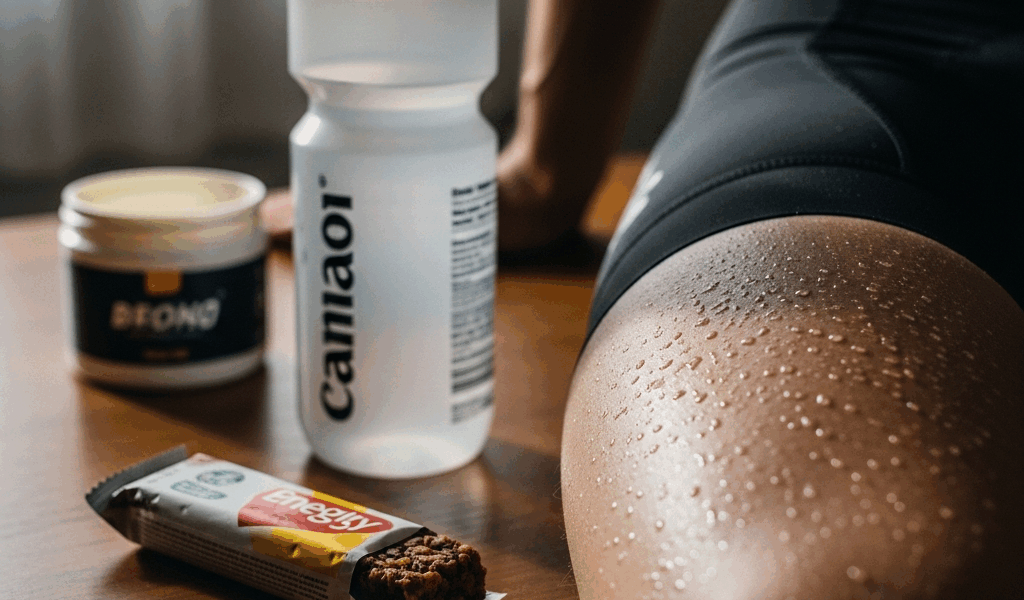
Where Chafing Really Comes From on Cycling Rides
I spent three seasons blaming my bike shorts for chafing. Tried every brand — every chamois thickness, every cream on the market. The rash always came back around mile 80, without fail. Turned out the shorts were innocent the whole time. The real culprit was sitting in my hydration pack.
Chafing happens when four things align: friction from repetitive motion, sweat volume that overwhelms your skin’s natural barrier, salt crystallization on the epidermis, and maceration — that’s the scientific term for when skin gets waterlogged and loses its structural integrity. Your shorts create the friction. Your fueling strategy? That determines everything else.
Start with the mechanical side. Cycling creates friction in specific zones — the saddle contact point, inner thighs, anywhere chamois seams sit. Eight hours in the saddle means millions of micro-movements. Premium shorts with perfectly molded padding fail if the skin underneath is compromised. Even the best chamois construction can’t save you there.
Sweat volume is the game-changer. A cyclist working at moderate intensity produces 60 to 80 ounces of sweat per hour in summer conditions. More in heat, less in cool weather, but that’s the baseline. All that sweat pools between your body and a synthetic chamois with limited airflow. The skin softens. The salt from your sweat crystallizes on the surface, creating a micro-abrasive layer. Friction meets compromised skin. That’s when the rash appears.
But here’s what most cyclists miss: sweat volume and composition are directly tied to hydration and electrolyte status. Dehydration doesn’t reduce sweating — it increases it while making your skin more sensitive to irritation. Your body panics when fluid levels drop, sweat glands work harder, and meanwhile your skin is more vulnerable because it’s dehydrated from the inside out.
How Hydration and Electrolytes Reduce Chafing Risk
Probably should have opened with this section, honestly. I wasted two entire seasons thinking hydration was just about preventing cramps and bonking. I drank water religiously. My chafing got worse.
Here’s the problem: plain water doesn’t contain sodium. When you drink only water on a long ride, you’re diluting your blood sodium concentration. Your body compensates by increasing sweat rate to maintain electrolyte balance. You end up sweating more, not less. Simultaneously, your skin loses its osmotic gradient — the cellular mechanism that keeps water inside the tissue. Water moves out. The skin becomes drier and more fragile despite being wet with sweat.
This is the counterintuitive part that changed everything. Proper hydration with electrolytes actually reduces sweat volume. When you maintain sodium and fluid balance, your body doesn’t panic. Sweat rate stabilizes. Skin stays hydrated at the cellular level. You’re less likely to develop the maceration that leads to rashes.
The benchmark is roughly 500 to 700 milligrams of sodium per hour during rides lasting more than 90 minutes. Not the 1000 mg some brands push — that’s overkill for most cyclists and creates other issues. I found 600 mg per hour (spread across water, sports drinks, and gels) worked perfectly for my 80-mile weekend rides in summer.
A standard sports drink with 20-30 mEq of sodium per liter hits this target when you’re drinking 20-24 ounces per hour. If you’re using gels or bars, they typically contain 100-200 mg of sodium each, so you adjust your electrolyte drink accordingly. Consistency is the goal. Irregular electrolyte intake leads to swings in sweat production — exactly the opposite of what you want.
I tested this during a 110-mile event last September. Drank a commercial sports drink with 600 mg sodium per liter, consumed about 22 ounces per hour, and added one gel with 150 mg sodium every 45 minutes. Result: stable sweat rate, zero chafing, and my power output felt steadier. The difference was startling.
The Pre-Ride Fuel Strategy That Prevents Chafing
Your pre-ride meal isn’t just about calories. It primes your hydration system and skin resilience before you clip in.
Eat a mixed meal 2 to 3 hours before riding. Something with carbs, moderate protein, and some sodium. I use oatmeal with a banana, a tablespoon of honey, and a pinch of sea salt — about 60 grams of carbs, 8 grams of protein, 300 mg sodium. Others swear by toast with almond butter and fruit. The exact composition matters less than the timing and balance.
That pre-ride meal serves two purposes. First, glycogen loading. Carbohydrates load your muscles with stored glucose, which means your body doesn’t have to rely as heavily on sweat-gland activation for thermoregulation during the ride. You’ll sweat less simply because your metabolic efficiency is higher. Second, the sodium in that meal primes your kidney and cellular fluid balance. You’re starting the ride with adequate electrolyte status, not in a deficit.
Drink 16 to 20 ounces of water or a dilute sports drink in the 90 minutes before the ride. Not right before — that creates a sloshing stomach. Sip it steadily. This allows your gut to absorb the fluid and establish proper hydration status before intensity hits.
The skin itself hydrates from within when you’re properly fueled and hydrated. Skin cells are healthier, more elastic, and more resistant to breakdown under friction. It’s not visible, but it’s real. I noticed my hands and forearms felt less raw after long rides when I got the pre-ride fueling right, not just the in-ride nutrition.
On-Bike Nutrition Pacing for Long Rides Without the Rash
Timing matters more than most cyclists realize. Irregular fueling causes energy crashes, which lead to posture shifts — subtle, almost unconscious changes in how you sit on the saddle. A new friction zone activates. The rash appears in a spot you’ve never had it before.
For rides under two hours, hydration with electrolytes is enough. No calories needed if you ate properly beforehand. For anything longer, aim for 200 to 300 calories per hour (in carbs), plus that 500-700 mg of sodium spread across your drinks and solid food.
I use a pattern that works for me: a gel with 100 calories and 150 mg sodium every 45 minutes, plus 22 ounces of sports drink per hour that contains another 450 mg sodium. That’s 300 calories and 600 mg sodium per hour, consumed in a rhythm my gut can predict. No surprises. No energy crashes. No posture shifts.
The separation between hydration and eating matters too. Don’t consume your gel and your sports drink at the exact same moment. Eat the gel, then sip water or electrolyte drink separately 10 minutes later. This staggers the digestive load and prevents the sugar-water sludge that can cause nausea and actually reduces your body’s ability to absorb sodium properly.
For rides over four hours, include a bar with protein and fat around the midpoint. Something like a Clif Bar or a homemade option with oats, nuts, and dried fruit. The fat and protein slow digestion and provide a more stable energy source than pure carbs. Your sweat rate stays more consistent. Your skin stays more resilient.
The Chamois Cream and Salt Strategy That Actually Works
Chamois cream is a tool. Not the solution by itself. Most cyclists apply it and expect miracles. It doesn’t work that way.
A quality chamois cream — I use Assos Chamois Cream, though there are dozens of viable options at $15-25 per tub — creates a moisture barrier. It prevents direct skin-on-fabric friction and reduces salt crystallization on the surface. But if you’re sweating excessively due to poor hydration upstream, the cream just becomes a vehicle for salt grinding against your skin.
Apply it directly to the chamois, not your skin. Let it set for a minute before you put the shorts on. The cream bonds with the synthetic material better than skin. During the ride, it stays where it’s supposed to stay. Apply it to bare skin and it migrates everywhere — gets on your jersey, washes away with sweat.
For rides under two hours, I don’t use chamois cream at all. Proper hydration and a quality chamois are sufficient. For anything longer, I apply a thin layer. A little goes a long way. I’ve seen cyclists cake it on and create the opposite problem — too much friction from the thick layer itself.
Here’s the salt strategy: after a long ride, rinse the shorts thoroughly in cool water, then soak them in a gentle soap solution for 30 minutes. This removes salt buildup before it hardens into your chamois fabric. I rinse mine immediately after every ride over 60 miles, even if I’m not washing the whole short yet. Salt crystallization in the fabric is cumulative. It’s one of the most underrated chafing risk factors.
Your shorts, your hydration, your pre-ride nutrition, and your on-ride fueling all work together. Optimize one without the others and you’re still going to chafe. Fix all four and the rash disappears — even on 120-mile rides in the heat.



Subscribe for Updates
Get the latest cycling nutrition hub updates delivered to your inbox.
We respect your privacy. Unsubscribe anytime.