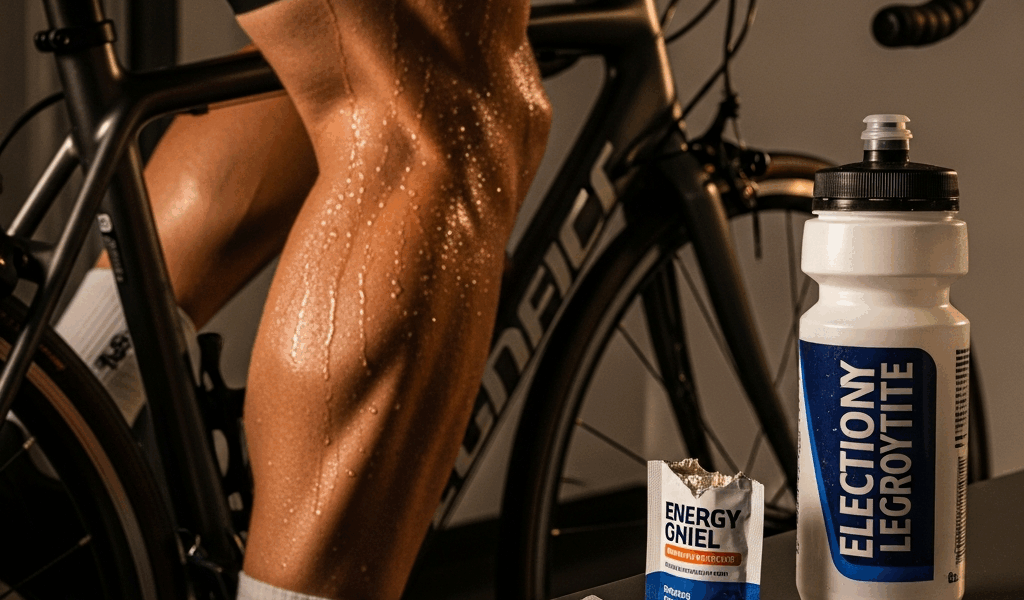
What Heavy Legs During Cycling Actually Mean
Cycling has gotten complicated with all the recovery gadgets, training zones, and optimization noise flying around. But the most common complaint I hear from riders — heavy, sluggish legs — almost never gets traced back to the right cause.
As someone who spent two full years blaming fitness for a nutrition problem, I learned everything there is to know about what actually makes your legs feel like concrete. Today, I will share it all with you.
That dead-weight sensation isn’t just fatigue. It’s a signal. Most cyclists shrug it off as normal training stress — and keep suffering — when the fix is sitting in their kitchen.
I rode five days a week. Hit my power targets. Kept a training log in a beat-up Moleskine notebook I still have somewhere. And by mile three of almost every ride, my legs felt like they weighed forty pounds each. Not the satisfying burn from a hard effort. Just flat. Sluggish. Heavy.
Here’s the distinction worth burning into your brain: normal fatigue comes after hard work. You push, you feel it, you recover. But heavy legs that show up before you’ve earned them? That’s your body telling you something is missing.
The training world defaults to the same advice. Rest more. Sleep more. Take an extra recovery day. Those things matter, sure. But if you’re following your plan and your legs still feel like sandbags at mile four, the gap isn’t in your schedule — it’s in what you’re eating. Specifically in three areas most cyclists never examine closely enough: glycogen stores, electrolyte balance, and daily calorie timing.
Training load accounts for maybe thirty percent of the heavy-leg problem. The other seventy is nutrition. Full stop.
Low Glycogen Is the Most Common Culprit
But what is glycogen? In essence, it’s the carbohydrate fuel your muscles store and burn during exercise. But it’s much more than that — it’s essentially your legs’ operating budget, and most cyclists are starting every ride already overdrawn.
Your body holds roughly 90 grams of glycogen in your liver and around 400 grams across your muscles. Sounds like plenty until you’re sixty minutes into a ride and you’ve burned through most of it already.
Depleted glycogen feels exactly like heaviness. Like pushing through invisible resistance. Your legs don’t hurt — they just won’t move the way you expect them to.
Probably should have opened with this section, honestly. It’s the easiest fix and the most overlooked one.
I learned this the hard way on a Tuesday in late October. Skipped breakfast, rode at 6 a.m., bonked hard by mile eight. Then — and this is the embarrassing part — I did the exact same thing the following Monday and somehow got surprised when my legs felt dead from the first pedal stroke. Don’t make my mistake.
Three eating patterns cause this more than anything else:
- Under-eating carbs the night before — dinner with only 40 grams of rice instead of the 100 grams your muscles actually need
- Skipping breakfast entirely or eating only protein and fat before a morning ride
- Eating breakfast too close to your start time, so digestion is competing with your muscles for blood flow
If your ride is at 7 a.m., you need carbs in your system two to three hours earlier. Two slices of toast with honey. A bowl of oatmeal with berries. A plain bagel with peanut butter. Pick something you can actually stomach that early in the morning — I’m apparently a creature of habit and Bob’s Red Mill instant oatmeal with brown sugar works for me while anything denser never sits right before a ride.
The evening before, load carbs intentionally. Not obsessively. Just don’t eat like a regular Wednesday. Add an extra serving of pasta. Have toast with jam as a late snack. Aim for 100 to 150 grams of carbs from that dinner alone, on top of whatever you ate the rest of the day.
Sounds excessive. Then you remember that a single fifty-minute ride burns forty to sixty grams of glycogen depending on intensity. You need a reserve before you even clip in.
Sodium and Fluid Imbalance Can Mimic Fatigue
Sodium doesn’t get the attention it deserves in cycling nutrition circles. Everyone obsesses over water intake. Nobody talks about the salt your body actually needs to use that water properly.
Here’s what happens. You sweat. You lose sodium. You drink plain water to replace fluids. Your blood sodium concentration drops. Your muscles can’t contract as efficiently. Everything starts feeling heavy — not painful, just unresponsive.
This pattern hits hardest on back-to-back ride days. Day one, you feel fine. Day two, your legs feel like they weigh thirty pounds. Day three feels like pedaling through wet cement. That’s what makes this pattern so frustrating to cyclists who ride Monday through Friday — it looks like accumulated fatigue but it isn’t.
Electrolyte drinks aren’t a marketing gimmick, and I say that as someone who resisted them for an embarrassingly long time. When you ride for longer than ninety minutes, plain water genuinely doesn’t cut it. You need sodium — typically 300 to 500 milligrams per hour of riding. That’s roughly what one bottle of Skratch Labs or Nuun gives you, or what you’d get from a small bag of pretzels mid-ride.
Hot weather makes everything worse. I did a 70-mile gravel ride in June with two bottles of plain water and no electrolytes. Around mile fifty, my legs stopped responding like I’d flipped a switch. Added a single bottle of electrolyte mix to the following Saturday’s ride. The difference was immediate and kind of infuriating, given how simple the fix was.
The solution isn’t complicated: drink something with sodium on rides over ninety minutes. On shorter back-to-back rides, use an electrolyte drink between sessions rather than plain water.
How to Tell Which Problem You Actually Have
Diagnosis matters here — at least if you want to actually fix it rather than just throw everything at the wall. The fix changes depending on when the heaviness shows up.
If heavy legs hit from the first two miles: Low glycogen. Your pre-ride fueling was insufficient. Check what you ate in the six hours before you rode. Under 40 grams of carbs? You found your culprit.
If heavy legs appear halfway through a ride lasting over two hours: You’re bonking mid-ride. Glycogen is depleting faster than you’re replacing it. You need carbs during the ride — 40 to 60 grams per hour depending on your body weight and effort level.
If you ride on back-to-back days and only the second or third day feels heavy: Cumulative glycogen depletion or electrolyte loss — sometimes both. Your pre-ride carbs might be fine, but you’re not restoring glycogen between sessions. Eat carbs within thirty minutes of finishing your first ride. Include sodium in recovery meals, not just post-ride protein shakes.
If caffeine temporarily improves the feeling: This points toward glycogen depletion or electrolyte imbalance, not overtraining. Caffeine doesn’t fix the underlying fuel shortage — it just masks it by spiking adrenaline and mobilizing blood sugar. The heaviness comes back. Usually worse.
The Fix — What to Change Before Your Next Ride
Start with the easiest variable: pre-ride nutrition. That’s what makes this approach so useful to cyclists who are already tired of complicating everything.
So, without further ado, let’s dive in.
If your ride starts at 7 a.m., eat breakfast at 4 or 4:30 a.m. Sounds rough. It is rough, for about a week. But the difference shows up in your legs by mile five and it stops feeling optional pretty quickly. Aim for 60 to 80 grams of carbs — oatmeal with brown sugar, two slices of toast with jam, a bagel with honey. Add a small amount of protein or fat so you don’t spike and crash. Skip anything high in fiber right before riding.
Adjust based on your digestion. Feel sluggish in the stomach? Eat earlier. Still bonking mid-ride? Eat more carbs or move your breakfast closer to start time. Your gut is part of this equation.
Evening carb-load: add a side of rice, pasta, or roasted potatoes to dinner. Aim for an extra 60 to 80 grams of carbs beyond your normal intake. Do this the night before any ride longer than sixty minutes — not just long weekend efforts.
For rides ninety minutes or longer, an electrolyte solution might be the best option, as cycling at that duration requires consistent sodium replacement. That is because plain water actually dilutes your blood sodium over time, which compounds the muscle-contraction problem rather than solving it. Most sports drinks hit 300 to 500 milligrams of sodium per bottle. Check the label — it should list sodium in milligrams, not grams.
While you won’t need a sports nutritionist or a $400 metabolic test, you will need a handful of consistent habits: a pre-ride meal, an electrolyte source, and carbs on the bike for long efforts. An energy bar, two gels, a sports drink, plain crackers — 40 to 60 grams per hour. Find what your stomach tolerates and stick with it.
First, you should track this for two weeks — at least if you actually want to see a pattern instead of guessing. Keep a simple note on your phone: what you ate, when you ate it, how your legs felt at miles five, thirty, and sixty. Patterns show up fast. Usually within the first four or five rides.
If heavy legs persist after fixing pre-ride glycogen, electrolyte intake, and mid-ride fueling, then sleep quality, training load, or something deeper becomes the next suspect. But ninety percent of the time, the problem is solved before you get anywhere near that conversation.



Subscribe for Updates
Get the latest cycling nutrition hub updates delivered to your inbox.
We respect your privacy. Unsubscribe anytime.