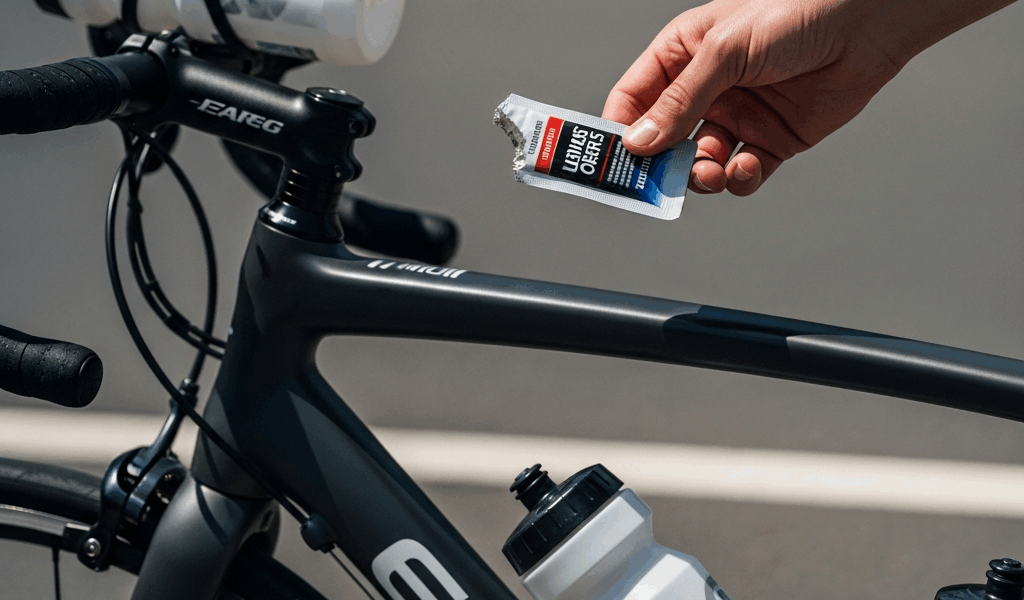
Eating on the Bike Is Not the Same as Fueling Correctly
Cycling nutrition has turned into a moving target with all the gel reviews, carb-loading myths, and conflicting advice flying around. As someone who spent three seasons bonking on rides I was absolutely eating through, I worked through the fundamentals of the gap between swallowing calories and actually using them. Today, I will share it all with you.
That gel you swallowed at mile 45? Still working its way toward your bloodstream. The sports drink sloshing around in your gut? Queued up, waiting to be absorbed. There’s a 30 to 45 minute lag between ingestion and availability — and it’s completely invisible until your legs stop working. By the time the wall hits, you’re not dealing with what you ate five minutes ago. You’re dealing with what you didn’t eat an hour ago.
Most nutrition guides tell you what to eat. This one is about why your fueling still falls apart even when you know the rules. It’s not about finding the perfect gel flavor — it’s about execution. The actual moves you make on the bike when you’re tired, distracted, and your stomach feels genuinely weird.
You Started Eating Too Late in the Ride
Important part first. Late eating is the mistake I see most often — and the one I made for the better part of three years.
Here’s how it goes: you’re rolling at a comfortable pace, feeling strong, no hunger signal yet. So you wait. Why reach for a gel when you don’t need one? Then somewhere around mile 55, hunger lands hard and fast. You grab your first bar. This is already too late.
Glycogen depletion is a slow bleed. Your muscles are burning through stored carbohydrate from the first pedal stroke, but you won’t feel the shortage until reserves are critically low. Hunger showing up is not an early warning — it’s a late one. You eat at mile 55, but those calories won’t reach working muscle for another 30 to 45 minutes. The bonk at mile 85 isn’t caused by what you ate at mile 80. It’s caused by what you skipped at mile 40.
The practical fix: first carbs within 20 minutes of rolling. Not when hunger arrives. Before it has any reason to. Set a timer on your Garmin or Wahoo if you have to — seriously, the alert feature exists for this. It feels wrong at first. Eat anyway. Think of it as preventative maintenance, not reactive rescue.
Rides under 90 minutes? Your baseline glycogen stores will probably carry you. Anything longer than that, start the clock early and learn from what tripped me up.
Your Carb Intake Per Hour Is Still Too Low
Even riders who eat during long efforts typically eat too little. The target is 60 to 90 grams of carbohydrate per hour on rides pushing past 90 minutes — with harder efforts demanding the higher end of that range. But most cyclists I’ve talked to are landing somewhere between 30 and 50 grams per hour and genuinely puzzled about why they’re fading by hour three.
But what is 60 grams, actually? In essence, it’s more food than most people expect. But it’s much more than just a number. One Gu Energy Gel clocks in around 22 grams. A medium banana is roughly 27 grams. A small handful of pretzels might get you to 35 grams total. So if you’re eating one gel every 45 minutes on a hard three-hour ride, you’re pulling maybe 40 grams per hour. You’re underfueled by almost half.
The fix is blunt: eat more, eat more often. Two gels every 90 minutes plus a Clif Bar and some Skratch or Maurten in your bottle. Or a gel every 45 minutes with a sports drink running 6 to 8 percent carbohydrate concentration. The exact combination matters less than consistently hitting that 60 to 90 gram window.
The volume surprises people most. That’s what makes this mistake so endearing to us cyclists — we think we’re fueling well because we’re fueling at all. Insufficient intake is one of the easiest execution failures to diagnose. And fix.
Your Gut Shuts Down Before Your Legs Do
Overwhelmed by the effort of a hard climb, your digestive system makes a ruthless decision. Blood diverts away from your stomach and intestines toward working muscle. Absorption slows. Sometimes it stops entirely. You chew a gel at threshold and feel it just sitting there — heavy, unpleasant, doing absolutely nothing.
That’s what makes gut shutdown so frustrating to us endurance athletes. You did the right thing. You ate. And your body still refused to cooperate.
Hard efforts and digestion don’t share resources well. The work is too intense. The gut taps out. So fueling during your worst moments is often wasted fueling — calories spent on discomfort rather than watts.
The solution requires restraint. Eat during easier segments. Descents. Flat recovery sections. The rolling zone between climbs where your heart rate drops back into zone 2 and your digestive system has room to actually function. If you know a climb is coming at mile 35, finish eating before you hit the base. Eat on the way down. This coordination takes real practice — which is exactly why most riders never do it.
I’m apparently a “descents only” eater at this point, and timing food to terrain works for me while eating mid-climb never really did. Don’t do what I did of figuring that out after three years of GI misery.
How to Build a Fueling Plan That Actually Works
So, without further ado, let’s dive in — but first, a framing note. While you won’t need a sports nutritionist on retainer, you will need a handful of resources: a bike computer with interval alerts, a reliable ride log, and enough snacks to seriously over-pack for your first few test rides.
First, you should test your fueling in training rides, not on race day — at least if you want data that’s actually useful. A 90-minute Sunday morning loop is the perfect low-stakes lab. Bring more than you think you’ll need. Experiment with timing and volume when bonking won’t cost you a finish time or a group ride reputation.
A simple time-based checklist might be the best option, as consistent fueling requires removing decisions from tired brains. That is because decision fatigue at mile 70 is real — you’ll skip food not because you planned to, but because thinking feels hard. Write the plan before you leave. Every 30 minutes: one gel plus a few ounces of sports drink, or a bar plus water, or a good pull from a carbohydrate-containing bottle. No improvising required.
Track what actually works across multiple rides. Some stomachs handle Maurten gels better than SiS bars. Some riders absorb 90 grams per hour without issue; others hard-cap at 60. A Gu Roctane at $2.50 per gel might sit fine during a hard effort while a cheaper alternative never settles right. You won’t know until you test it across conditions — heat, fatigue, high intensity. Failing in training is the entire point.
This new approach to ride fueling takes hold after several weeks of consistent testing and eventually evolves into the automatic, pre-loaded habit endurance riders know and rely on today. Bonking when you’re actively eating is almost always an execution problem — not a nutrition knowledge problem. You know what to eat. You probably know how much. What you’re still learning is the when, the coordination with terrain, and what your specific gut will tolerate at mile 80. These are practiced skills. Treat them exactly that way.

Subscribe for Updates
Get the latest cycling nutrition hub updates delivered to your inbox.
We respect your privacy. Unsubscribe anytime.