
Tart Cherry Juice for Cycling Recovery: What the Research Actually Confirms
Athletic recovery supplements have gotten complicated with all the competing claims flying around — proprietary blends, cherry extracts, “anti-inflammatory protocols” at $4 a serving. As someone who spent months being skeptical of tart cherry juice before actually reading the meta-analysis and finding more legitimate evidence than I expected, I learned everything there is to know about what the research actually shows and when it’s worth using. Today, I’ll share the mechanism, the dosing, and when it earns a place in your routine versus when it doesn’t.
What the Research Actually Shows
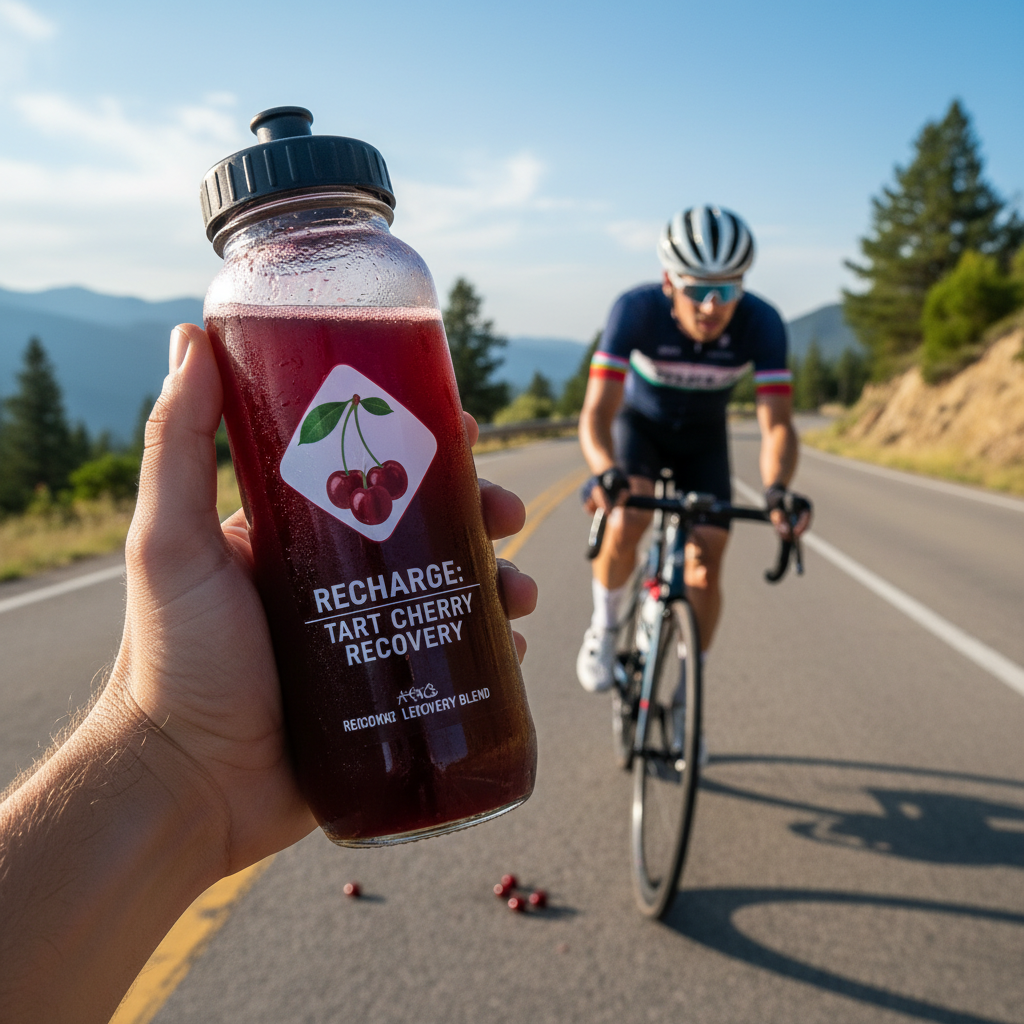
Tart cherry juice has been studied for athletic recovery since the mid-2000s, and the evidence has been building steadily. The most recent meta-analysis, published in 2021 and pulling together 14 randomized controlled trials, confirmed what smaller studies had been suggesting for years: tart cherry supplementation meaningfully reduces delayed onset muscle soreness (DOMS) and accelerates recovery of muscle function after intense exercise.
The mechanism isn’t mysterious. Tart cherries, specifically Montmorency varieties, are dense in anthocyanins — the pigments that give them their deep red color. These compounds act as both antioxidants and anti-inflammatory agents. When you hammer a hard effort or a long ride, you create oxidative stress and localized inflammation in muscle tissue. That’s normal and necessary for adaptation. The problem is when that inflammation lingers and compounds across training days, which is where tart cherry’s anthocyanins appear to help by moderating the inflammatory cascade without completely suppressing it.
The effect on cytokine markers — specifically interleukin-6 and C-reactive protein — has been consistent enough across studies that researchers are fairly confident the mechanism is real, not just placebo. That matters because a lot of recovery “supplements” fall apart when you start looking at biomarkers rather than just asking athletes how they feel.
What the Meta-Analysis Actually Found
Probably should have led with this section, honestly. The 2021 meta-analysis found the most pronounced effects in two scenarios: high-intensity resistance exercise and endurance events lasting over 90 minutes. For cyclists, that means long days in the saddle, back-to-back training blocks, and stage races are exactly the contexts where tart cherry shows up most reliably in the data.
Effect sizes were modest but meaningful. In practical terms, athletes reported reduced soreness scores of roughly 20-25% compared to placebo at the 24- and 48-hour marks post-exercise. Strength recovery was also faster — studies using isometric and isokinetic testing showed tart cherry groups returned to baseline force production about 24 hours faster than controls.
Timing showed less importance than total intake. Several protocols front-loaded consumption before exercise, others used post-exercise supplementation, and some split it both ways. The consistent finding was that total daily anthocyanin intake mattered more than whether you drank it in the morning or evening. That’s good practical news — you don’t need to nail a specific timing window.
The protocols that showed the most benefit generally ran for five to seven days, not just a single dose. This isn’t a one-shot intervention. The anti-inflammatory effect builds over several days of consistent intake.
Practical Dosing Protocol
The most studied dose is 480ml per day of Montmorency tart cherry juice, typically split into two 240ml servings. That’s about 16 ounces total. For concentrated shots — the small bottles sold as “tart cherry concentrate” — the equivalent is usually 30ml twice daily, though this varies by brand and concentration factor, so check the anthocyanin content on the label if it’s listed.
For a hard training week or a multi-day event, I start five days out and continue through the final recovery day. That gives you the full loading effect going in and keeps the anti-inflammatory support active through the hardest days. For a single hard race, starting two or three days before and continuing the day after is a reasonable approach based on the shorter protocols in the research.
There’s no strong evidence that taking it closer to a workout matters, so I take it with breakfast and dinner. Easy to remember, easy to build into a routine.
When It’s Most Worth Using
That’s what makes tart cherry endearing to us cyclists managing multi-day loads — it’s one of the few recovery supplements that has earned its evidence base through genuine research, not marketing. Not every week. Most worth the cost and the routine during specific high-load periods: heavy training blocks where you’re riding five or six days in a row, multi-day events like gravel stage races or cycling tours, race weekends where you’re competing Saturday and Sunday, and the first week of a training camp when your body is absorbing more load than usual.
During base-building weeks or recovery weeks, I don’t bother. The training stress isn’t high enough to justify the expense, and there’s some theoretical concern — mostly in the resistance training literature — that aggressively suppressing post-exercise inflammation during normal training could blunt adaptation over time. That evidence isn’t conclusive for endurance athletes, but it’s a reason not to run tart cherry year-round just because.
Cost and How It Compares to Other Recovery Methods
Tart cherry juice runs roughly $8-15 per week depending on whether you use juice or concentrate and where you buy it. That’s not nothing, but it’s not expensive compared to other recovery investments.
Sleep is first, and it’s not close. Nothing in the recovery toolkit comes close to the effect size of getting eight to nine hours of quality sleep. If you’re sleeping six hours and drinking tart cherry juice, you’re optimizing around the edges while ignoring the engine.
Ice baths have comparable evidence for acute soreness reduction, particularly in the 48 hours after intense exercise. The research on ice baths is actually stronger for power and strength sports than endurance, and the cold stress is more uncomfortable to maintain consistently. Tart cherry is easier to keep up across a full week.
Compression garments have decent evidence for perceived recovery and some objective markers. They’re worth using if you already have them. Combining compression with tart cherry during a hard stage race makes sense — these aren’t competing approaches.
Protein timing, carbohydrate replenishment within the recovery window, and overall calorie adequacy all have stronger evidence bases than tart cherry for most athletes. Tart cherry is an addition to fundamentals, not a substitute for them.
Concentrated Shots vs. Regular Juice
Both work. Concentrated shots are more practical for travel, racing, and anyone who doesn’t want to drink 16 ounces of juice per day. Regular juice is cheaper and easier to find in grocery stores. The key variable is anthocyanin content, which varies more between brands than between formats.
Montmorency specifically is the variety with the most research behind it. Some products blend cherry varieties or use sweet cherries, which have a different anthocyanin profile and less research support. If the label just says “cherry juice” without specifying Montmorency, it’s harder to know what you’re getting.
Taste is a legitimate consideration. Tart cherry juice is sour in a way that some people genuinely dislike. The concentrated shots get it over with quickly. Mixing juice with water makes it more palatable without meaningfully diluting the active compounds.
What Tart Cherry Won’t Do
It won’t make up for under-fueling on the bike. It won’t fix poor sleep. It won’t rescue you from a training block that was too aggressive. The effect size in the research is real but it’s not large — we’re talking about the difference between feeling 70% recovered and feeling 80% recovered, not the difference between destroyed and fresh.
It also won’t replace the recovery adaptations that come from accumulated fitness. The better conditioned you are, the faster you recover regardless of supplements. Tart cherry juice is a marginal gain, and marginal gains only matter after the major gains are in place.
The honest summary: it works, the evidence is solid, the mechanism makes sense, the cost is reasonable, and the risk is essentially zero. During high-load periods, it’s one of the few supplements worth recommending without caveats. Just don’t expect it to transform your recovery in isolation from everything else.



Subscribe for Updates
Get the latest articles delivered to your inbox.
We respect your privacy. Unsubscribe anytime.