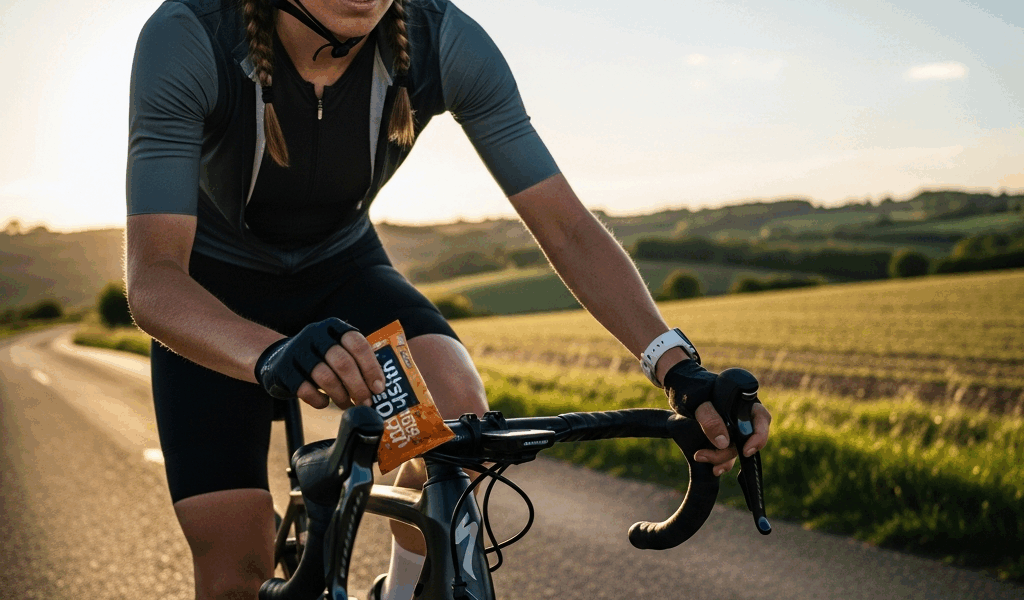
Mid-Ride Fueling — What to Eat Every 30 Minutes on a Long Ride
Figuring out what to eat during a long bike ride every 30 minutes is the difference between finishing strong and crawling to your car wondering why your legs stopped working somewhere around mile 40. I’ve been cycling seriously for about eight years, and I bonked badly enough on a 80-mile gran fondo in 2019 that I literally sat on a guardrail for 20 minutes eating someone else’s leftover banana. That was the day I stopped winging my nutrition and started treating it like training. This article is the plan I wish I’d had — specific, timed, and practical enough to actually follow while you’re also trying to, you know, ride a bike.
The 30-60-90g Rule Explained Simply
Most nutrition guides throw the “30 to 60 grams of carbohydrates per hour” range at you and then leave you to figure out the rest. Let me make this concrete.
Here’s how to choose your number:
- 30g per hour — Casual endurance rides under 70% of your max heart rate, rides under two hours, recovery rides. Think one banana or one small rice cake per hour. Your body is still oxidizing fat efficiently here and doesn’t need to be force-fed carbs.
- 60g per hour — Hard training rides, group rides with surges, anything where you’re spending significant time above zone 3. A standard 40g energy bar plus a small gel or two dates gets you here.
- 90g per hour — Racing, long gran fondos with big climbing, centuries where you want to actually feel good at mile 80. This number only works if you’re using a 2:1 glucose-to-fructose ratio, meaning dual-carb sources. Your gut can absorb roughly 60g/hr of glucose alone before it backs up; adding fructose opens a second transport pathway. Products like Maurten 320 mix or Science in Sport Beta Fuel are formulated specifically for this.
The reason this matters practically: if you’re targeting 90g/hr on race day but you’ve only ever trained your gut on 40g/hr, you’re going to spend a lot of time at the port-a-potty. Gut training is real. The specific grams you can handle at race pace is something you practice, not something you assume.
For most of this article, I’m going to write toward the 60g/hr rider — the person doing a 4-6 hour ride with moderate to hard effort. Scale up or down from there.
Hour 1 — Start Fueling Before You Feel Hungry
Probably should have opened with this section, honestly, because this is where most people ruin their ride before it even gets interesting.
Hunger is a lagging indicator. By the time you feel hungry on a bike, your blood glucose is already dropping and you’re 20-30 minutes away from the fog that precedes a real bonk. Your body doesn’t send an early warning flare. It sends a desperate SOS.
Minute 0 to Minute 20 — Ride, Don’t Eat Yet
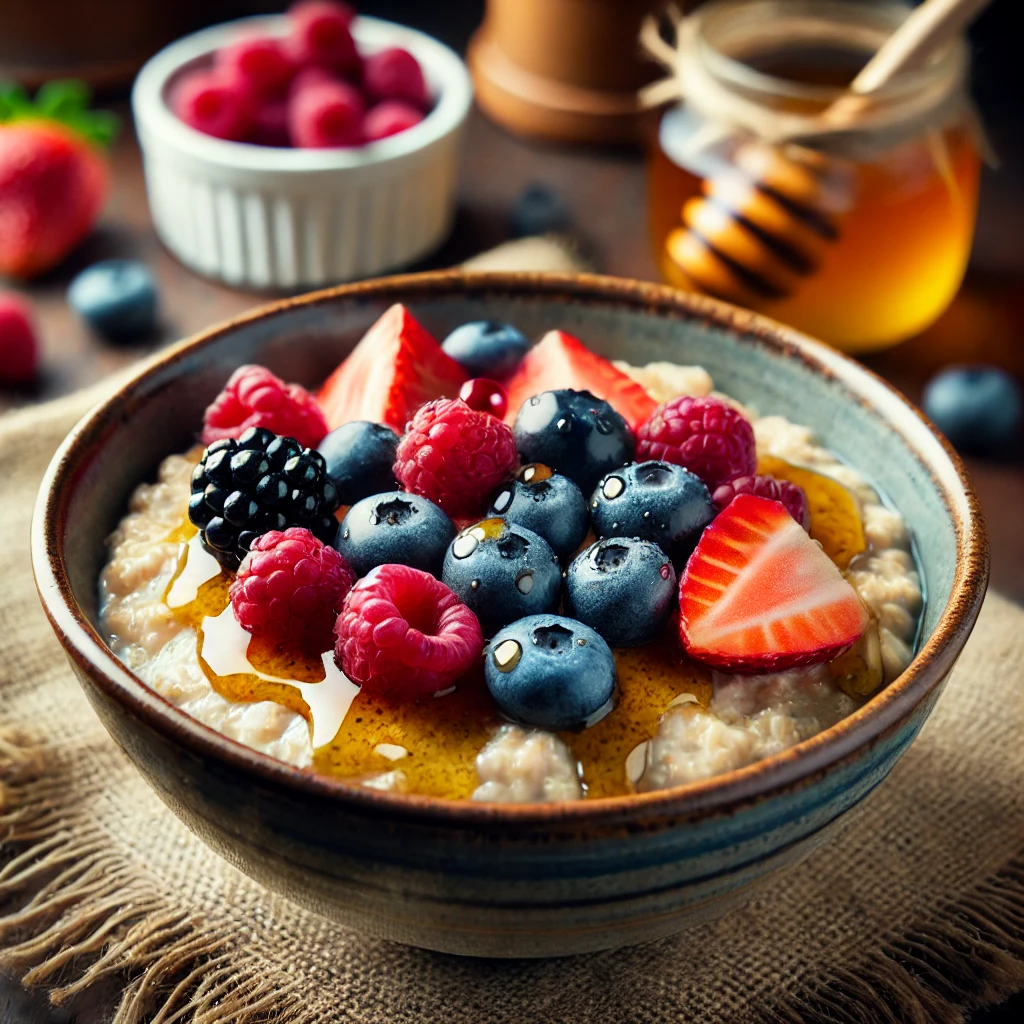
Start your ride. Let your body settle in. Eating immediately at the gun is unnecessary — you should have had a solid pre-ride meal 60-90 minutes before rolling out. Something like oatmeal with a banana and a bit of honey, around 500-600 calories. That glycogen is in your muscles already. Let it do its job.
Minute 20 to Minute 30 — First Food
Eat something at minute 20-30. Not because you need it desperately yet, but because you’re establishing the rhythm. This is the best window for solid food. Your stomach is still happy, blood flow to your gut is manageable, and real food digests without drama at this intensity.
Good options here:
- Half a Clif Bar (original formula, about 22g carbs for half) — I keep these cut in half and wrapped in foil in my back jersey pocket
- One Medjool date stuffed with peanut butter and a pinch of salt
- A small homemade rice cake — the kind Skratch Labs describes in their cookbook, about 150 calories each
- A banana, if you can manage peeling it while moving
Minute 60 — Second Feeding
Same format. Another piece of real food. If you’re targeting 60g/hr, you’ve had roughly 20-25g in that first hour. Add another 35-40g here. One full Clif Bar (45g carbs) works. So does a Nature’s Bakery Fig Bar (35g carbs, about $1.20 per bar at Costco) plus a few Sport Beans.
Drink 500-750ml of fluid per hour in moderate conditions — more if it’s hot. I use a 750ml Specialized Purist bottle and make myself finish it each hour. Not negotiating with myself about it.
Hours 2-3 — The Gel Transition
This is where the ride gets physiologically more interesting and practically more demanding. Two things happen in hours 2-3 that change your fueling strategy.
First, stomach tolerance drops. As ride intensity accumulates and your body diverts more blood to working muscles, your gut becomes increasingly unhappy with solid food. A Clif Bar that sat fine at mile 15 can feel like a brick at mile 55. This isn’t weakness. It’s physiology.
Second, you need to maintain carb intake without adding GI distress — and that’s exactly what gels are designed for.
When to Make the Switch
Burned by ignoring this transition on multiple rides, I now make a deliberate decision around the 90-minute mark: finish whatever solid food I have in progress, then move to gels and chews for the remainder of the ride. Some people can eat solids all day. Most can’t, and most don’t discover this until they’re miles from help.
Around minute 90, take your first gel. Good options:
- Maurten Gel 100 — 25g carbs, no caffeine, extremely gut-friendly for most riders, $3.50 each at REI
- GU Energy Gel Salted Caramel — 22g carbs, 35mg caffeine, one of the more palatable flavors in the gel world
- Precision Hydration PF 30 Gel — 30g carbs, mild flavor, dissolves in water if you want to mix it into your bottle
The Timing Pattern for Hours 2 and 3
Take a gel every 30-45 minutes. Drink water immediately after — always water, not sports drink, with a gel, because you don’t want to double up on sugar concentration hitting your gut at once. 150-250ml of plain water per gel is my standard.
Your hour 2 should look something like this: gel at minute 90, gel or chews at minute 120, gel at minute 150. That’s roughly 50-75g of carbs depending on your products. Throw in a caffeinated gel at minute 120 if you want a mental boost without going overboard — 50mg of caffeine mid-ride is a genuine performance aid, not a gimmick.
Keep electrolytes coming. I use Precision Hydration 1000mg tablets dissolved in one of my bottles per hour in hot weather, or SaltStick FastChews (one tablet = 100mg sodium) every 45 minutes. Cramping in hour 3 is very often an electrolyte problem, not a fitness problem.
Hours 4+ — The Survival Protocol
Four hours in, you might be hitting the wall mentally before you hit it physically. Flavor fatigue is completely real and almost nobody talks about it. After eating eight sweet gels, the idea of another Salted Caramel GU can make your stomach turn in a way that has nothing to do with digestion.
This is why variety isn’t just a nice-to-have for long rides. It’s a performance necessity.
Go Savory
Carry something salty and savory after hour 3. Real options that work:
- Mini pretzel bags — the Snyder’s 1oz individual bags are perfect jersey pocket size
- Small bag of salted nuts
- Feed Zone-style savory rice cakes with soy sauce and sesame
- PB&J cut into quarters — sounds basic, works brilliantly
Coke at Rest Stops
If you hit a rest stop or convenience store anywhere in hour 4 or later, get a Coke. Small, not a 32oz fountain disaster. A standard 8oz serving has about 26g of sugar — glucose and fructose split — plus caffeine, and something about the carbonation and real sugar snaps your brain back online in a way that synthetic products don’t quite replicate. Ultrarunners have known this for decades. Cyclists are catching up.
Keep the 30-Minute Clock Running
Set a watch interval or Garmin alert. Every 30 minutes, you eat something. Doesn’t matter what — rotate through your options. The goal is simply consistent delivery of 30-60g of carbs per hour. The clock keeps you honest when your brain is tired and your motivation to eat anything drops.
Hour 4 fueling looks like: pretzels and chews at minute 210, gel at minute 240, something savory at minute 270. Drink to thirst, but don’t stop drinking entirely just because you’re not sweating as heavily. Mild dehydration slows digestion and makes everything worse.
5 Fueling Mistakes That Cause Bonking
These aren’t theoretical. I’ve made most of them personally and watched training partners make the others.
- Not starting early enough — Waiting until you feel depleted at hour 2 before eating anything. Your blood glucose has already started sliding. You’re now chasing deficits instead of maintaining stability, and it takes 45-60 minutes for ingested carbs to fully hit your bloodstream.
- All gels, no solids — Going gel-only from mile one because it’s convenient. Real food in the first hour means better satiety, better morale, and slower-releasing carbohydrates that stabilize your energy more effectively than back-to-back gels.
- Forgetting electrolytes — Eating plenty of carbs but drinking plain water all day. Sodium drives fluid absorption. Without it, you can be drinking constantly and still end up dehydrated at the cellular level. Electrolytes aren’t optional on rides over two hours.
- New products on race day — Showing up to your A-race with a gel brand you’ve never tried because you saw a discount code on Instagram. Your gut has zero tolerance training for that product. Even if the carb numbers look identical, different formulations hit differently. Every product you race with should have at least 3-4 training ride reps behind it.
- Not practicing the plan — Knowing intellectually that you should eat every 30 minutes but never actually setting a timer and drilling it in training. Race day is stressful. You forget to eat. Your heart rate is up and your appetite suppresses further. The only way the plan runs automatically under pressure is if you’ve trained it to be automatic.
The 30-minute interval isn’t magic. It’s a rhythm. Once you’ve ridden with it for four or five long rides, you’ll feel the window coming before the timer even goes off. Your body learns when it needs to be fed. But it only learns that if you teach it consistently — which means starting the habit now, on your next long ride, not on the event you’ve been training for all season.
Pack your kit tonight. Cut your bars in half. Write the plan on a piece of tape and stick it to your top tube if you have to. The riders who never bonk aren’t the most talented or the most fit. They’re the ones who eat before they’re hungry, drink before they’re thirsty, and treat nutrition like the fourth discipline it actually is.

Subscribe for Updates
Get the latest cycling nutrition hub updates delivered to your inbox.
We respect your privacy. Unsubscribe anytime.