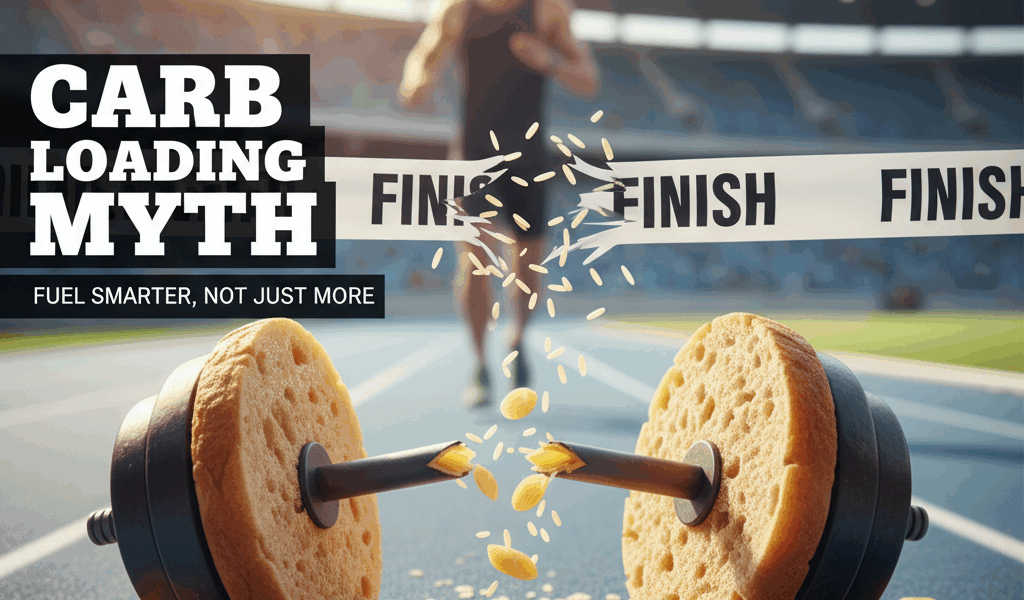
Carb loading is not a myth—but the giant pasta dinner the night before a ride is. A true carbohydrate-loading protocol is a planned 36–48 hours of high carbohydrate availability before an endurance event, combined with reduced training. It is most relevant when a hard ride or race will last about 90 minutes or longer. It is usually unnecessary for an easy spin, short criterium or ordinary one-hour workout.
For cyclists who will benefit, sports-nutrition guidance commonly targets roughly 10–12 grams of carbohydrate per kilogram of body weight per day for 36–48 hours. That is a large intake and should be practiced before an important event—not attempted for the first time at a race. Individual needs, tolerance and medical conditions vary.
Is carb loading a myth?
No. The performance strategy is real; several popular versions are wrong. Muscle and liver store carbohydrate as glycogen. During prolonged or high-intensity cycling, those stores contribute heavily to working-muscle energy. Starting with high glycogen availability can delay the point at which limited carbohydrate availability constrains pace.
What is mythical is the idea that any large, carbohydrate-heavy dinner automatically counts as loading. One meal cannot reliably reproduce a structured 36–48-hour protocol. It can also create gastrointestinal discomfort if the rider overeats a rich, high-fat or high-fiber meal immediately before competition.
The older “deplete, then load” method is also generally unnecessary. Modern protocols pair a taper or rest period with high carbohydrate intake; they do not require several miserable days of exhaustive training and carbohydrate restriction first.
Who should consider carb loading?
Carb loading is most useful when the event is long enough and hard enough to place substantial demand on glycogen. Examples include:
- a century ride or long gran fondo;
- a demanding road race expected to exceed 90 minutes;
- long mountain-bike or gravel races;
- time trials or stage events where duration and intensity make carbohydrate availability important;
- back-to-back endurance days with limited recovery time.
A short recovery ride does not need a special loading phase. Neither does every recreational ride that happens to last two hours at an easy pace. Duration is a practical threshold, not the only variable: intensity, fitness, usual diet, starting glycogen, opportunities to eat during the event and performance goals all matter.
The evidence-based target
A widely cited sports-nutrition review by Burke, Hawley and Jeukendrup describes carbohydrate loading for events longer than about 90 minutes as approximately 10–12 g/kg per 24 hours for 36–48 hours. The joint position statement from the Academy of Nutrition and Dietetics, Dietitians of Canada and the American College of Sports Medicine likewise emphasizes periodizing food and fluid strategies around the athlete, exercise demands and environment.
Here is what 10–12 g/kg means in food-weight terms:
| Body weight | 10 g/kg per day | 12 g/kg per day |
|---|---|---|
| 55 kg / 121 lb | 550 g carbohydrate | 660 g carbohydrate |
| 65 kg / 143 lb | 650 g | 780 g |
| 75 kg / 165 lb | 750 g | 900 g |
| 85 kg / 187 lb | 850 g | 1,020 g |
Those numbers explain why “just add pasta” is poor advice. The target may require several meals, snacks and carbohydrate-containing fluids across the day. It also explains why athletes should test the approach during training and may benefit from help from a registered sports dietitian.
How to carb load for cycling
- Confirm that the event warrants it. Reserve a formal load for a long, performance-focused ride or race.
- Begin 36–48 hours before the start. A Saturday morning event typically means emphasizing carbohydrate through Thursday and Friday, not only at Friday dinner.
- Reduce training volume. Loading works alongside a taper because less training means less glycogen is being spent while intake rises.
- Distribute intake. Use meals, snacks and drinks rather than forcing one enormous meal.
- Choose familiar foods. Race week is not the time to experiment with new supplements or a radically different cuisine.
- Keep adequate protein. Shift the diet toward carbohydrate without treating protein as disposable. Fat and fiber are often reduced temporarily to make the carbohydrate target easier and decrease gut bulk.
- Continue the race-morning and during-ride plan. Loading does not replace breakfast or fuel consumed during a long event.
Foods that make the target practical
During a brief loading window, lower-fiber carbohydrate choices can be useful because they provide carbohydrate without excessive fullness. Options include white rice, pasta, bread, bagels, pancakes, cereal, potatoes without heavy toppings, bananas, applesauce, juice, jam, honey, pretzels, rice cakes and sports drinks.
This is not a recommendation to make refined carbohydrates the foundation of the everyday diet. It is a short, event-specific strategy. Riders who tolerate whole grains, fruit and vegetables well can still include them; the point is to avoid suddenly multiplying fiber to the point that the gut becomes uncomfortable.
A practical day might contain oatmeal with banana and honey, toast and juice at breakfast; rice with a modest portion of lean protein at lunch; a bagel, fruit and sports drink as snacks; and pasta with a lower-fat sauce at dinner. Exact portions must match the rider’s target and tolerance.
Carb loading is not uncontrolled overeating
The goal is to increase carbohydrate availability, not to see how many calories can be consumed. If a rider adds hundreds of grams of carbohydrate on top of an unchanged high-fat diet, total energy intake and stomach volume can become extreme. Temporarily reducing high-fat foods and spreading intake across the day creates room for carbohydrate without relying on one heavy meal.
Do not deliberately dehydrate to offset scale weight. Glycogen storage is accompanied by water storage, so body weight commonly rises during a successful loading period. That increase is not equivalent to gaining the same amount of body fat. It should be expected, particularly in events where carrying abundant carbohydrate matters more than a small temporary change on the scale.
Common carb-loading mistakes
Starting at dinner the night before
A pre-event dinner is one component, not the entire protocol. Begin early enough to distribute the intake over 36–48 hours.
Using rich restaurant food
Creamy sauces, fried food and enormous mixed meals may contain carbohydrate, but they can also add large amounts of fat and unfamiliar ingredients. Choose familiar, relatively simple foods.
Eating too much fiber
Beans, very large salads, bran cereal and large volumes of whole grains may make a high target harder to tolerate. Some athletes reduce fiber temporarily before an event. Never use a new restriction without testing how your gut responds.
Ignoring fluid and sodium
Drink normally according to thirst and the planned event conditions; do not force excessive water. Hot conditions and heavy sweaters may require a tailored hydration and sodium strategy.
Skipping fuel during the ride
High starting glycogen does not make stores unlimited. Long-event performance still requires a practiced during-ride fueling plan.
Trying it for the first time before the goal race
Practice on a lower-priority long ride. Record foods, quantities, stomach comfort, morning weight and performance. Adjust with a qualified professional if the target feels impossible or causes symptoms.
Carb loading versus the pre-ride meal
These are related but different strategies. Carb loading occurs across the preceding 36–48 hours to maximize glycogen availability. The pre-ride meal supplies additional carbohydrate, helps address overnight liver glycogen use and prevents hunger. It should be familiar and timed so the rider starts comfortable.
A cyclist who does not need a full loading protocol may still benefit from an ordinary carbohydrate-rich meal before a hard ride. Conversely, a cyclist who loaded successfully should not abandon the tested race-morning meal.
What about diabetes, GI disorders or weight-sensitive athletes?
A high-carbohydrate protocol can affect glucose management, medication needs, gastrointestinal symptoms and eating behavior. Riders with diabetes, a history of disordered eating, kidney disease, significant GI conditions or other medical concerns should not copy a generic internet target. Work with the treating clinician and a registered dietitian experienced in sport.
Seek medical care for severe or persistent symptoms. This guide provides general sports-nutrition education and is not a personalized nutrition prescription.
Carb-loading checklist
- The event is long and demanding enough to justify loading.
- The protocol has been practiced before race week.
- Carbohydrate is calculated from body weight rather than guessed from plate size.
- Training volume falls during the loading period.
- Food is spread across meals, snacks and appropriate drinks.
- Choices are familiar and reasonably easy to digest.
- The pre-event meal and during-ride fueling plan are also prepared.
- Medical or GI concerns have been discussed with an appropriate professional.
Bottom line
Carb loading works, but it is a targeted endurance strategy—not a ritual pasta dinner and not a requirement before every ride. For events longer than about 90 minutes, the research-based approach is a high-carbohydrate intake—often 10–12 g/kg per day—across the final 36–48 hours with reduced training. Practice it, individualize it and continue fueling during the event.
Sources: Burke, Hawley and Jeukendrup, “Carbohydrates for training and competition”; Academy of Nutrition and Dietetics, Dietitians of Canada and ACSM joint position statement.




Subscribe for Updates
Get the latest cycling nutrition hub updates delivered to your inbox.
We respect your privacy. Unsubscribe anytime.