Building a Cycling-Specific Meal Plan
Meal planning for cyclists has gotten complicated with all the conflicting advice flying around these days. As someone who has experimented with every diet trend from keto to high-carb and tracked macros obsessively for years, I learned everything there is to know about what actually works for training adaptation. Today, I will share it all with you.
That’s what makes cycling nutrition endearing to us obsessive types — the bike doesn’t lie. Eat wrong and you bonk. Eat right and you fly. The feedback loop is immediate and brutal.
Periodizing Your Nutrition
Probably should have led with this section, honestly. Your caloric needs change based on what you’re doing that day. Eating the same whether you’re resting or racing makes no sense. This is called nutritional periodization, and it’s the single most useful concept I’ve learned.
Easy days and rest days: Dial back the carbs. Focus on protein and vegetables. I drop to roughly 2-3 grams of carbs per kilogram of bodyweight. Your muscles don’t need much fuel when they’re not working.
Moderate training days: Bump carbs to 4-5 grams per kilogram. Spread them around your workout window — some before, some after, some during if the ride is long.
Hard training days or long rides: This is when you earn the pasta. Go to 6-8 grams of carbs per kilogram. These days fuel performance AND recovery for the next session.
Sample Day: Rest Day
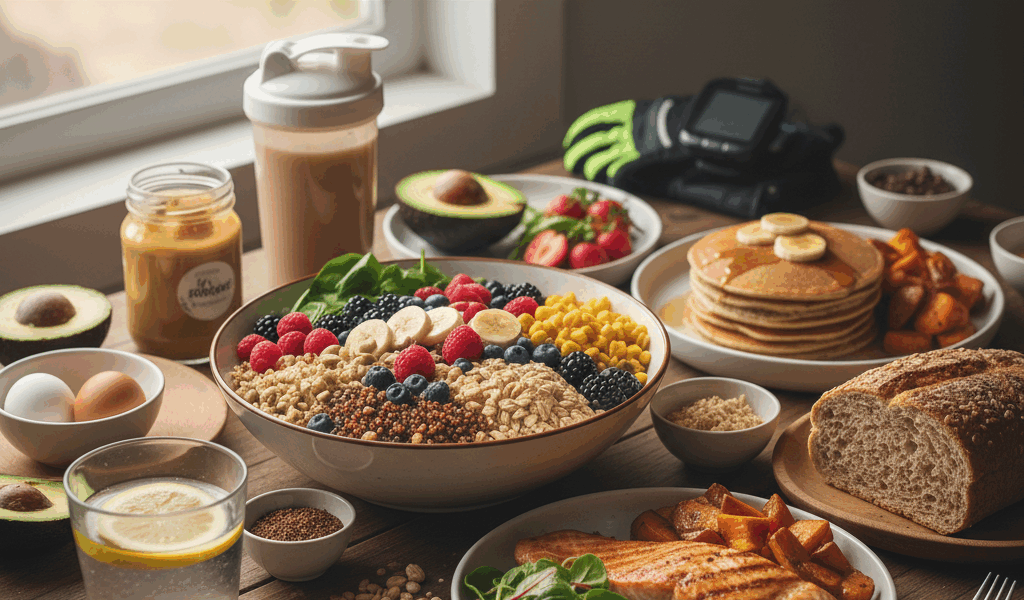
Breakfast: Omelet with whatever vegetables you have, maybe some cheese, small piece of toast. Coffee if you’re human.
Lunch: Big salad with actual protein — chicken, salmon, whatever. Avocado, olive oil dressing, maybe a small scoop of quinoa.
Dinner: Grilled fish or lean meat with roasted vegetables and a small sweet potato. Nothing fancy.
Snacks: Greek yogurt, handful of nuts, vegetables with hummus if you’re actually hungry.
Sample Day: Hard Training Day
Pre-workout: Oatmeal with banana and honey 2-3 hours before. Add protein powder if your ride is early and this is replacing breakfast.
During workout: 60-90 grams carbs per hour from gels, drinks, or bars. Yes, that’s a lot. Train your gut to handle it.
Post-workout: Recovery shake immediately, then real food within the hour.
Lunch: Big bowl of rice with chicken and vegetables. Sauce of choice. This is not the time for portion control.
Dinner: Pasta with meat sauce, side salad, bread if you want it.
Snacks: Fruit, rice cakes with almond butter, smoothies. Carbs are your friend today.
Protein Requirements
Endurance athletes need more protein than couch potatoes. Aim for 1.4-1.8 grams per kilogram daily. The key is spreading it across meals — 20-40 grams per sitting maximizes muscle protein synthesis. Loading it all at dinner is less effective.
Best sources: chicken, fish, eggs, Greek yogurt, cottage cheese, lean beef, tofu, tempeh, beans. Protein powder fills gaps but shouldn’t be your main source.
Healthy Fats
Fat is not the enemy. Your hormones need it. Your cells need it. Your long-term energy depends on it. Target 20-35% of calories from fat, emphasizing olive oil, avocados, nuts, seeds, and fatty fish. Don’t stress about saturated fat in whole foods. Stress about saturated fat in processed junk.
Micronutrients That Actually Matter
Iron: Carries oxygen to muscles. Female cyclists and vegetarians are most likely deficient. Get blood work done if you’re tired all the time. Red meat, spinach, fortified cereals help. Pair plant sources with vitamin C for better absorption.
Vitamin D: Most of us don’t get enough, especially indoor trainers and anyone north of the 35th parallel. Supplement during winter at minimum.
Calcium: Bones need it, and cycling is non-weight-bearing so your bones don’t get the usual signals to stay strong. Dairy, fortified plant milks, leafy greens.
Magnesium: Involved in basically everything. Nuts, seeds, whole grains, dark chocolate. Yes, I’m giving you permission for dark chocolate.
Hydration Between Rides
Drink water throughout the day, not just on the bike. Your urine color tells you everything — pale yellow is good, dark yellow means drink more. Include some electrolytes after training or in hot weather.
Practical Meal Prep Tips
Cook grains and proteins in batches on Sunday. Keep pre-washed salad greens ready. Stock your freezer with healthy options for busy days. Prepare recovery snacks in advance so you actually eat them. Good containers keep prepped food fresh — invest in them.
Supplements Worth Considering
Most supplements are marketing. A few have actual science: Caffeine works for most people. Beta-alanine might help with hard efforts. Creatine supports power and recovery. Omega-3s from fish oil offer general health benefits. Vitamin D makes sense for many. Beyond these, save your money.


Subscribe for Updates
Get the latest articles delivered to your inbox.
We respect your privacy. Unsubscribe anytime.