
Oakley Kato: The Wild Frameless Sunglasses
Cycling eyewear recommendations have grown more complex with the lens technologies and frame designs flying around. As someone who first saw the Katos on a pro cyclist and thought they looked absurd, I spent real time learning the ins and outs of why there’s substance behind the style after trying a pair myself.
Now I own them. The design is polarizing but there’s real performance behind the looks.
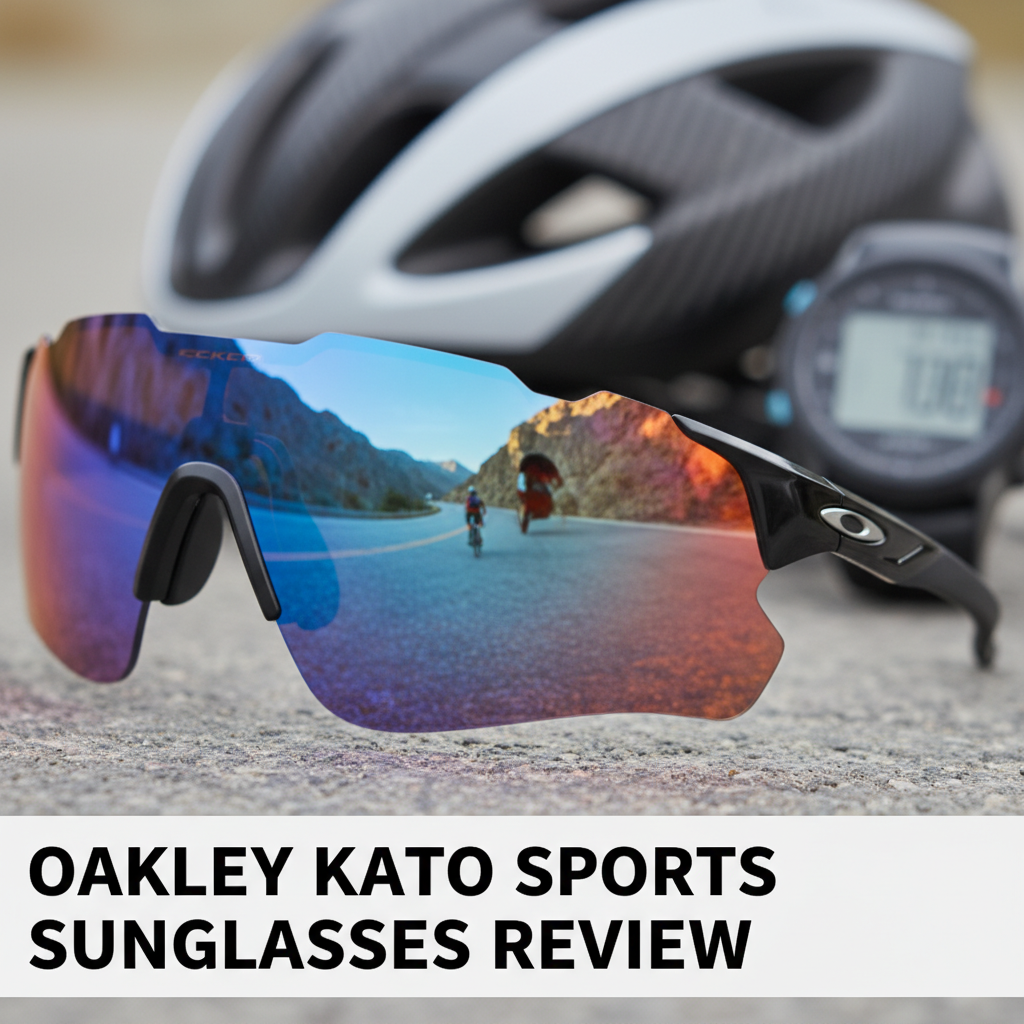
What Makes Them Different
Probably should have led about this area, honestly. The Kato has no frame – just one continuous lens that wraps around your face. The design extends further around the sides than traditional cycling glasses, approaching full peripheral coverage.
It looks like something from a sci-fi movie. People will comment. You either embrace that or these aren’t for you.
The Field of View
This is where the design pays off. Standard cycling glasses have frames that create blind spots in your peripheral vision. The Kato’s wrap eliminates that. You can see more without moving your head.
For road cycling in traffic, this matters. For criterium racing where people are constantly at your sides, it really matters. The extra visibility is genuine, not just marketing.
Prizm Lenses
Oakley’s Prizm technology enhances contrast in specific ways depending on the lens. Prizm Road makes road surfaces pop – you see texture and debris more clearly. Prizm Trail optimizes for trail riding conditions.
The contrast enhancement is noticeable but subtle. It doesn’t replace prescription lenses or solve actual vision problems. It just helps you see details better in the conditions the lens is designed for.
Comfort and Fit
Despite the aggressive looks, the Kato is surprisingly comfortable. Lightweight because there’s no frame. The nose pad adjusts for different face shapes. It stays put during hard efforts without pressure points.
Fits medium to larger faces better than smaller ones. The extended coverage can feel overwhelming on narrower faces.
Ventilation is decent – not the best among cycling glasses but adequate. I’ve had minor fogging on steep climbs in humid conditions.
The Price
These are expensive – around $300 depending on the lens. That’s a lot for sunglasses, even premium cycling glasses.
Is the performance worth it? Compared to $50 glasses, absolutely. Compared to $150 glasses from Oakley or competitors, it’s more about the design and peripheral coverage than pure optical advantage.
My Take
That’s what makes the Kato endearing to us cyclists who’ve tried them. I like them more than I expected to. The peripheral vision is noticeably better than my previous glasses. The styling grew on me – went from “that’s ridiculous” to “that looks fast.”
Would I recommend them universally? No. They’re expensive and the design is love-or-hate. But if you want the best visibility and don’t mind standing out, the Kato delivers on what it promises.



Subscribe for Updates
Get the latest cycling nutrition hub updates delivered to your inbox.
We respect your privacy. Unsubscribe anytime.