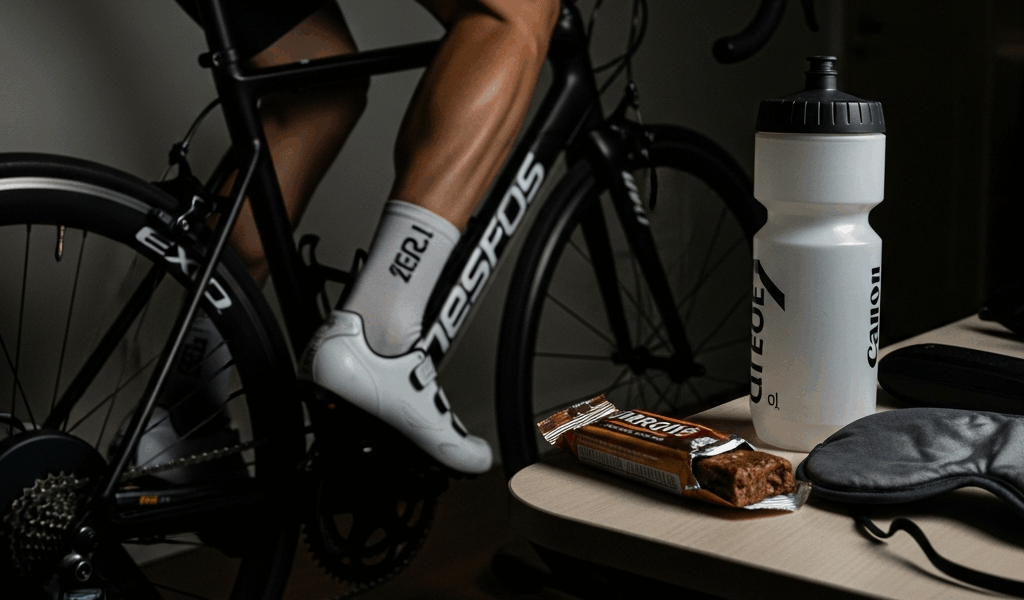
What Heavy Morning Legs Actually Feel Like
Morning rides have turned into a moving target with all the conflicting advice flying around. Eat before. Don’t eat before. Warm up longer. Train through the discomfort. Everyone has an opinion, and meanwhile your legs feel like someone poured wet concrete into your quads somewhere between 11 p.m. and 6 a.m.
You clip in. Every pedal stroke for the first few kilometers requires an actual conscious decision to push. The cadence won’t climb. Your power meter is sitting 20% below what you normally hold at the same effort — at least if you want to trust the numbers — and you’re genuinely wondering whether to turn around and go back to bed.
Then around minute 15, something shifts. Circulation picks up. The sluggishness starts peeling away. By kilometer 30, you’re fine. Completely fine. You held tempo yesterday without issue. So what happened overnight?
This isn’t deconditioning. It’s not overtraining syndrome creeping in. Heavy morning legs are a diagnostic problem — one with identifiable causes, almost all of them fixable before you even roll out the door. Here’s the distinction that matters: legs that feel heavy for five minutes and then clear up? That’s normal inertia. Legs still dragging at minute 20, still unable to hold a conversation pace? Something specific went wrong overnight. So let’s work backward.
You Probably Went to Bed Under-Fueled
This is the main culprit. This is the piece to know up front. Muscle glycogen sits highest when you wake up after a carb-adequate evening. It sits nearly empty when you trained hard at 5 p.m., ate dinner at 6, and didn’t touch food again before bed.
During sleep, your body doesn’t burn through much glycogen — resting metabolic rate is low. But if you started the night already depleted, morning glycogen stays depleted. Waking up after an overnight fast on a near-empty tank explains exactly why your legs feel unresponsive and leaden. The muscle cells have less fuel available for immediate use. Your nervous system can still recruit those fibers, but without accessible glycogen, the contraction feels sluggish. Like trying to start a car with a half-dead battery.
I made this mistake constantly. Rode hard in the afternoon, skipped the recovery meal thinking it would help with body composition, then couldn’t figure out why every morning ride for the next three days felt like pushing through standing water. The pattern was obvious once I stopped ignoring it. Save yourself the trouble I had.
The fix is specific: eat 20–30 grams of carbs in the 30 to 60 minutes before bed on nights following hard training. Not a full meal. A banana with a tablespoon of almond butter. Two slices of white toast with honey. A bowl of cereal. A plain bagel with jam. The carbs replenish muscle glycogen; a small protein component slows digestion so you’re not awake at 3 a.m. This isn’t about evening calories or weight gain. It’s about starting your next morning with something actually in the tank.
Overnight Dehydration Hits Harder Than You Think
But what is overnight dehydration doing to your legs? In essence, it’s reducing the fluid volume inside and around your muscle cells. But it’s much more than that.
You lose somewhere between 1 and 2 liters of fluid overnight — through respiration, through perspiration — especially when your bedroom runs warm or you trained hard the previous day. Most cyclists don’t drink water after evening rides. Many don’t drink much at dinner either. Wake up even moderately dehydrated and your blood becomes slightly more viscous. Intracellular volume drops. Muscles feel heavy and stiff. You feel weak despite being aerobically fine. That’s what makes the hydration piece so frustrating for riders who track everything else carefully but overlook this one overnight variable.
Two quick tests before your morning ride. First: urine color. Dark yellow or amber means dehydrated. Pale yellow means good. Second: if you have a scale handy, compare your weight to yesterday morning. A drop of more than 1% of body weight suggests meaningful overnight fluid loss. I’m apparently a heavy overnight sweater — my bedroom runs around 19°C and I still wake up a pound lighter — and the urine test works for me while the scale comparison never quite captures the full picture in time to act on it.
Timing matters here. Drink 500 milliliters of water immediately on waking — before the coffee, before breakfast. Wait 10 minutes. Then another 250 milliliters in the 10 to 15 minutes before you roll out. This avoids that sloshing sensation on the bike while still ensuring genuine rehydration at the start.
Rode hard the day before, or heading out for 90 minutes or more? Add sodium. Twenty-five milligrams per 100 milliliters of fluid aids retention. A pinch of sea salt in your bottle works. Nuun tablets or Liquid IV work. A homemade mix — water, a quarter teaspoon of table salt, a tablespoon of sugar — works identically and costs almost nothing.
Your Warmup Is Too Short or Too Aggressive
Cold muscles contract less efficiently. That’s not a metaphor. Your muscle tissue is literally lower in temperature when you wake up, and cooler tissue generates less force per contraction. Your nervous system hasn’t fully activated. Blood flow to working muscles takes a few minutes to ramp up. Your aerobic system needs time to shift from resting state to steady-state output. All of this is completely normal — and it explains why the first five minutes feel heavy even on a perfect morning.
Where most cyclists go wrong: they skip the warmup entirely, or they jump straight into threshold effort because the morning is short. Starting a ride at sweet spot power when your muscles are running 2 degrees Celsius below normal operating temperature is a reliable way to feel wrecked for the entire first third of your ride. You’re not riding through the heaviness at that point. You’re cementing it in place.
So, without further ado, here’s a 10-minute protocol that actually works. Zone 1 effort — so easy it feels almost silly — for the first five minutes. Spin up gradually to zone 2 over the next five. Don’t exceed zone 2. By minute 10, core temperature is up, your aerobic system is online, and neural recruitment to your working muscles has normalized. The heavy feeling has mostly cleared. Now you can ride normally. This works every single time.
When Heavy Legs Are a Warning Sign, Not a Fix
One morning of heavy legs? Glycogen, hydration, or warmup — pick one, fix it, move on. Consistently heavy legs more than twice a week? That’s a systemic recovery problem, and it won’t respond to the quick fixes above.
Track these over two weeks. Heavy legs on most morning rides. Power output sitting 15% below your baseline numbers. Resting heart rate elevated 5–10 beats per minute above normal. Inability to recover to zone 2 even on easy days. Muscle soreness that lingers past the 48-hour mark. Poor sleep or early waking. Two or more of those together suggests chronic under-fueling or accumulated under-recovery. Adding training load at this point makes everything worse.
Instead: audit your total daily carbohydrate intake. Most cyclists need somewhere between 5 and 10 grams per kilogram of body weight per day depending on training volume. A 70-kilogram rider doing 10 hours weekly needs 350–700 grams of carbs daily. Track three days honestly. You’ll probably find you’re eating around 200 grams. That’s a wide gap.
Add two pre-bed carb snacks. Increase carbohydrate intake during and immediately after hard rides. Retest in 10 days. Morning heaviness typically clears within a week once glycogen status normalizes — not because anything magical happened, but because you stopped showing up to morning rides already behind.
The diagnostic is actually pretty straightforward. Fix fuel first. Then hydration. Then warmup. Then sleep. Most mornings, your legs aren’t failing you. They’re just asking for something simple that you forgot to give them the night before.




Subscribe for Updates
Get the latest cycling nutrition hub updates delivered to your inbox.
We respect your privacy. Unsubscribe anytime.