What to Eat Before a Morning Ride — Cycling Breakfast Guide
This article includes affiliate links. We may earn a commission at no extra cost to you.
Pre-ride nutrition has gotten less clear-cut with all the fasted training noise and macro-optimization content flying around. I’ve bonked on the side of rural highways twice — once at mile 18 of a 40-mile ride, once at mile 6 on what I genuinely thought was just a casual spin. Both times I blamed my bike. My legs. The weather. I blamed everything except the actual problem: what I ate before rolling out that morning.
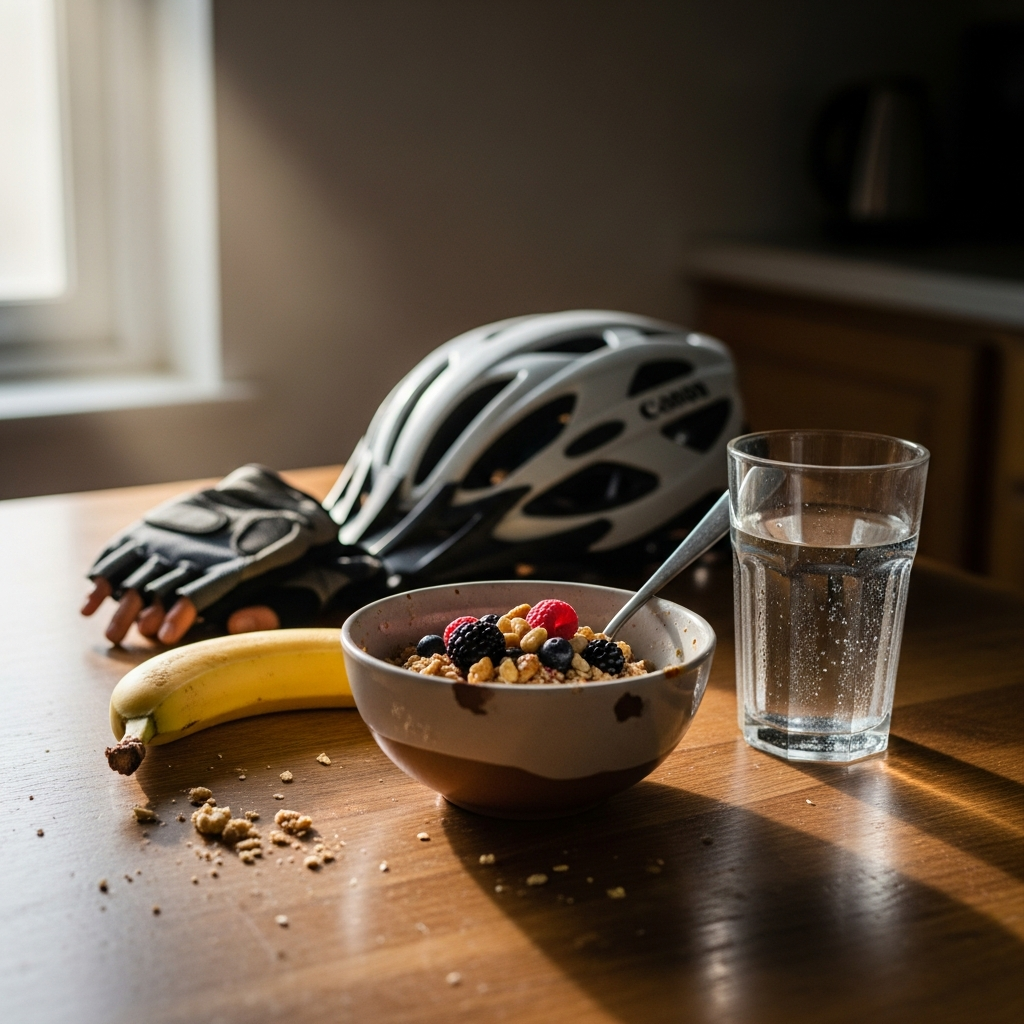
As someone who has experimented relentlessly with pre-ride meals — everything from eating nothing at all to a full breakfast 90 minutes before leaving — I picked up the practical knowledge of fueling a morning ride. Today, I will share it all with you. Not abstract macronutrient theory. Specific food, specific timing, specific results from someone who got it wrong before getting it right.
The 2-Hour Rule — When to Eat Before You Ride
Worth mentioning before anything else. Timing beats ingredient choice almost every single time.
Here’s the rule I live by now: full meal 2–3 hours before, smaller snack 30–60 minutes before, nothing heavy within that final hour before pedaling. Simple framework. Genuinely changes everything.
That one-hour cutoff matters more than most people realize. I learned this eating a bowl of oatmeal exactly 50 minutes before a Tuesday morning loop — spent the first eight miles feeling like I’d swallowed a brick. The carbs hadn’t converted yet, my stomach was sloshing around, and my pace suffered from gut distress rather than any lack of fuel. Skip the misstep I made.
The 2–3 hour window for a full breakfast gives your body actual time to digest. Blood sugar rises gradually. Your stomach settles down. You roll out feeling fueled rather than stuffed and miserable.
The 30–60 minute snack window works differently — it’s for lighter fuel that won’t sit heavy but gives you a quick energy bump right before you clip in. Think of it as priming the pump rather than filling the tank. That distinction matters.
Best Pre-Ride Breakfasts by Ride Length
Under 1 Hour — Banana and Coffee
For short easy spins under an hour, you genuinely don’t need much. I ride these most weekday mornings before work, and I’ve landed on one banana plus a cup of black coffee about 20–30 minutes before leaving. That’s it.
The banana delivers 27 grams of carbs and hits your system fast. The coffee does two things — provides roughly 95mg of caffeine in a standard eight-ounce cup and signals your gut that digestion should kick into gear. Simple. Effective. Takes maybe 90 seconds to prepare.
Some mornings I skip the banana entirely if I’m only riding the flat 35-minute loop near my house. The coffee alone handles that. But anything pushing toward 60 minutes? The banana goes in the jersey pocket before I walk out the door.
1–3 Hours — Oatmeal with Fruit and Honey
But what is the perfect medium-distance breakfast? In essence, it’s oatmeal with the right additions. But it’s much more than that — the specific ingredients and timing are what separate a great ride from a miserable one.
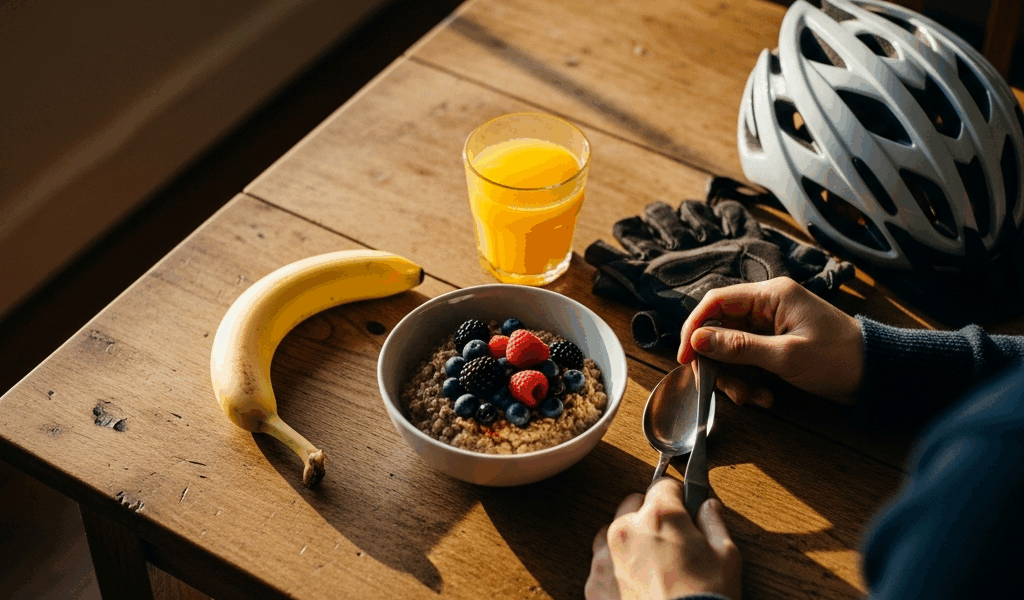
This is my go-to for weekend rides falling in the 90-minute to 2.5-hour range. I make it two hours before leaving. Here’s my exact recipe: one-half cup of rolled oats — Quaker brand, the regular kind, $3.50 per container — mixed with one cup of water, microwaved for three minutes, then topped with half a sliced banana, one tablespoon of raw honey, and a pinch of sea salt.
That combination delivers roughly 40 grams of carbs, eight grams of protein, and enough fiber to keep you satisfied without sitting heavy on the bike. The honey layers quick carbs on top of the slower-digesting oats. The banana handles potassium — which matters for muscle function once you’re an hour deep and sweating.
Total time: five minutes. Total cost: under $1.50.
I’ve tested probably a dozen pre-ride breakfast variations over the past few years. This one keeps coming back as the winner — steady energy, no stomach drama, no crash around mile 90. The two-hour window is non-negotiable, though. Eat it at 90 minutes out and you’ll feel the difference immediately.
3+ Hours — Full Breakfast with Carbs and Protein
For longer rides — the kind where you’re genuinely out for three hours or more — you need a legitimate breakfast hitting all three macronutrient categories. No shortcuts here.
My standard longer-ride breakfast, eaten 2.5–3 hours before rolling out: two slices of whole wheat toast with two tablespoons of almond butter, one fried egg on the side, one cup of fresh strawberries, one glass of orange juice. Every time. Same meal.
Breaking that down: the toast and nut butter deliver 25 grams of carbs plus fat for sustained energy later in the ride. The egg adds seven grams of protein and choline, which supports muscle function over longer efforts. Strawberries cover fiber and antioxidants. The OJ tops off carb stores with simple sugars — roughly 25 grams per cup — that your muscles can access quickly in the opening miles.
Total carbs: roughly 65–70 grams. Total protein: 15 grams. Total fat: 12 grams. That combination gets me through four-hour rides without bonking.
I’m apparently brand-loyal about peanut butter and Jif works for me while almond butter never feels quite as satisfying — but from a pure nutrition standpoint they’re identical. I rotate between them mostly to avoid eating the exact same breakfast every single Saturday for months on end.
On genuinely long days — six hours or more — I’ll add a Clif Bar (chocolate chip flavor, $1.25 each at most grocery stores) or a couple of rice cakes with honey about 30 minutes before rolling out. That extra hit of simple carbs makes a measurable difference in the first two hours of pedaling. My Garmin data backs this up.
What to Avoid Before Riding
I’ve learned what not to eat through some genuinely uncomfortable mornings. Some of these lessons were expensive in terms of suffering.
High-Fiber Foods
Steel-cut oats, whole grain bread, chia seeds, ground flaxseed — excellent foods in general, terrible choices within 1–2 hours of riding. Fiber takes longer to digest and causes GI distress once you’re pedaling hard. Your body is managing digestion while simultaneously demanding oxygen for leg muscles. Something gives. Usually it’s your comfort — and sometimes your dignity.
High-Fat Foods
Bacon, sausage, butter-heavy pastries, full-fat yogurt. Save these for post-ride recovery when your stomach can handle slow digestion at its leisure. Fat slows gastric emptying — meaning food lingers in your stomach longer than you want it to. That translates directly to bloating and distress on the bike. Not worth it.
Dairy If You’re Sensitive
I can eat Greek yogurt before a ride without any problems. My riding buddy — a guy I’ve been doing Saturday loops with since 2019 — absolutely cannot. One bowl and he’s mentally somewhere else for the first 30 minutes, thinking about his stomach instead of his output. Know your own gut. Test this stuff on low-stakes rides, the neighborhood loop, not a 60-mile event where it actually matters.
Anything You Haven’t Tested
Never eat something new before a big effort. Never. I rode with someone who tried a new granola breakfast before a group ride — spent 15 minutes on the side of the road while the rest of us waited. That’s why serious cyclists repeat the exact same pre-ride meals obsessively before important days. It feels neurotic until you understand why.
Fasted Rides — When They Actually Make Sense
The cycling internet is genuinely obsessed with fasted riding — wake up, drink water, hammer on an empty stomach, supposedly teach your body to burn fat more efficiently. That’s what makes fasted training endearing to us amateur cyclists, honestly. It sounds so elegantly simple.
I’ve done them. They work for exactly one scenario.
A 45-minute recovery spin at conversational pace? Fine fasted. You’re moving slowly enough that your body taps glycogen and fat reserves without stressing either system. No problem at all.
A 60-minute ride with interval work? Don’t fast. You’ll hit those intervals underfueled, power output drops, and you extract less training benefit from the whole session — the opposite of what you showed up to accomplish.
The “fat adaptation” narrative — the idea that fasted training teaches your body to preferentially burn fat during hard efforts — is overhyped for recreational cyclists. Elite endurance athletes use this strategically as one small piece of a much larger training structure. Most of us just need steady fuel so we can complete the workout at the intensity it was designed for. That’s the whole point.
I’ve experimented enough to know my answer: fasted training makes me slower and irritable. A banana and a cup of coffee makes me faster and noticeably happier. My Garmin confirms the first part. My riding partners confirm the second. So, without further ado, let’s make the obvious choice and eat something before we ride.
Your morning ride deserves better than guessing. Eat strategically, time it properly, and your legs will carry you through the next three hours without complaint.


Subscribe for Updates
Get the latest cycling nutrition hub updates delivered to your inbox.
We respect your privacy. Unsubscribe anytime.