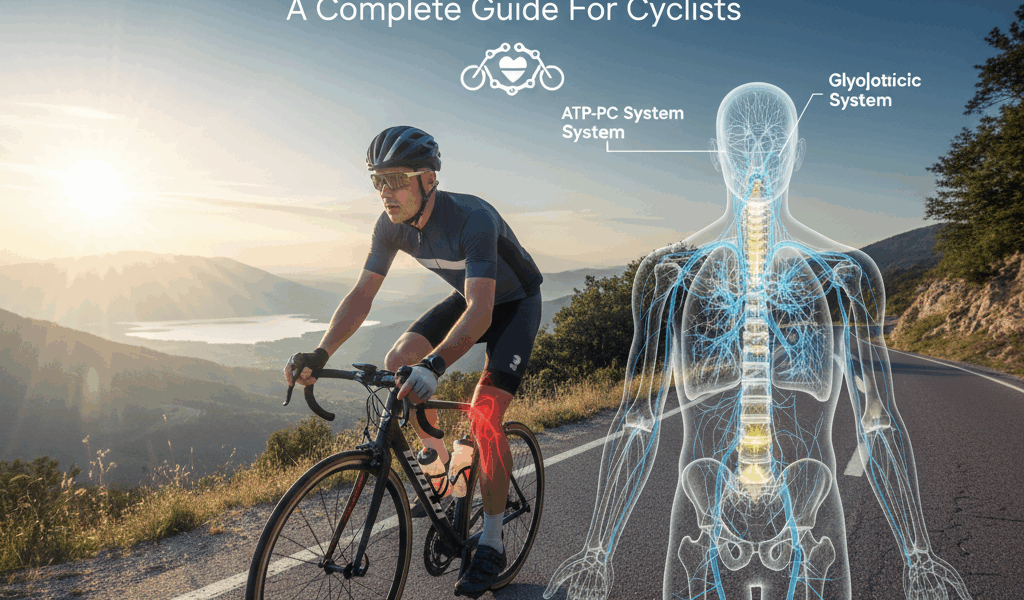
Your Body’s Three Fuel Tanks: What Actually Happens When You Pedal Hard
Understanding your energy systems has grown more complex with the sports science jargon flying around. As someone who went from “I guess I just get tired” to actually understanding why certain efforts hurt differently—and how to fuel for each—I spent real time learning the ins and outs of how your body powers the pedals. Today, I will share it all with you.
The Sprint Tank: ATP-CP System (First 10 Seconds)
That’s what makes this system endearing to us sprinters and crit racers—it’s pure power, no waiting. When you launch an attack, jump for a town line, or respond to a surge, your muscles tap stored ATP and creatine phosphate. Instant energy, no oxygen required.
The catch? It empties in about 10 seconds of max effort. Then you’re switching to other systems whether you like it or not. The good news is it refills quickly—2-3 minutes of easy spinning and you’re ready to go again.
You don’t fuel this tank during rides. It runs on stored energy in the muscles themselves. What matters is rest between hard efforts. This is why criterium racing is about recovery as much as power—you need those precious seconds of soft pedaling to reload.
The Surge Tank: Glycolytic System (10 Seconds to 2 Minutes)
This is the pain cave system. That sustained climb. The long pull at the front. The final kilometer when everyone is suffering. Your body breaks down glucose and glycogen fast, without oxygen, generating power quickly but with a price tag.
The byproduct is that burning sensation in your legs. Old science blamed lactate. New science knows lactate is actually useful—your muscles can burn it as fuel. The burn comes from hydrogen ions that accumulate during hard efforts. Either way, it hurts.
Probably should have led in this section, frankly: this system is highly trainable. Threshold intervals, sweet spot work, over-under efforts—all of these improve your ability to sustain higher power in this zone. Proper glycogen stores let you do quality training that drives adaptation.
The Endurance Tank: Aerobic System (2+ Minutes)
This is where you live for most of every ride. Using oxygen to break down carbs and fats efficiently. It’s slower to respond when you accelerate, but it can keep going for hours with proper fueling.
At lower intensities, you burn more fat. As you push harder, the mix shifts toward carbs. At threshold and above, you’re burning almost entirely carbohydrates. And here’s the problem: your body only stores maybe 2000 calories of glycogen. A long hard ride burns way more than that.
This is why fueling matters for endurance. Your fat stores are essentially unlimited, but fat can only fuel lower intensities. When you want to maintain pace on a long ride, you need carbs coming in.
What This Means for Actual Riding
Rides under 60 minutes: If intensity is moderate and you’ve eaten normally beforehand, your tanks are full. Water is all you need. Your stored glycogen covers this easily.
60-90 minute rides: Start eating, especially if there’s intensity involved. 30-60 grams of carbs per hour. A gel every 30-40 minutes or steady sports drink sipping.
Longer than 90 minutes: This is where serious fueling matters. Aim for 60-90 grams of carbs per hour. To absorb that much, you need products with multiple sugar types (glucose plus fructose). Your gut has separate pathways for each and can absorb more total using both.
Training Your Gut
Here’s what most people mess up: your intestines adapt just like your legs. If you never practice high-carb intake during training, your stomach will revolt when you try it during a race.
Start lower and build up over training blocks. Practice with the exact products you’ll use in events. If you want to consume 90 grams per hour during a race, you need to train at that level first. The gut gets better at absorbing when you ask it to.
The Fat Adaptation Debate
You’ve probably heard about training your body to burn more fat through low-carb diets or fasted rides. There’s something to it for ultra-endurance events where intensity stays low. But research is clear: high-intensity performance requires carbohydrates. Period.
Most competitive cyclists find success with periodization—lower carb on easy days, plenty of carbs for hard sessions and races. This “train low, compete high” approach can improve metabolic flexibility without killing your top-end. But it’s a tool, not a religion.
Bottom Line
Match your fuel to your effort. Short easy rides need almost nothing. Long or intense rides need consistent carb intake. Your gut is trainable—practice race nutrition during training. And pay attention to what works for your body specifically. The science gives you a framework, but everyone’s a bit different in the details.




Subscribe for Updates
Get the latest cycling nutrition hub updates delivered to your inbox.
We respect your privacy. Unsubscribe anytime.